
Leave Your Message
-
Contact WhatsApp
-
 Contact Phone
-
 Contact Email
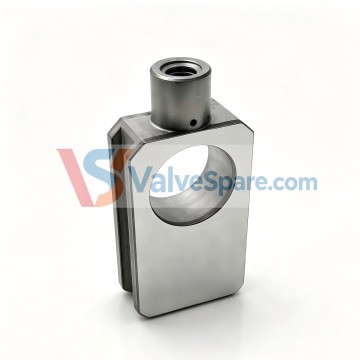
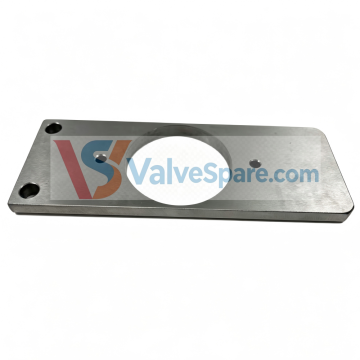
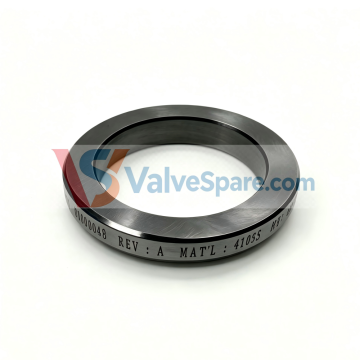
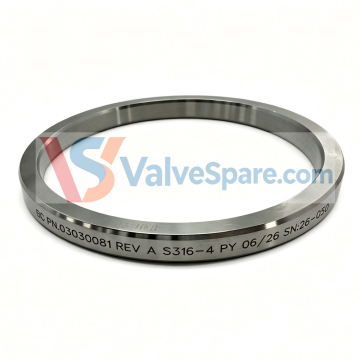
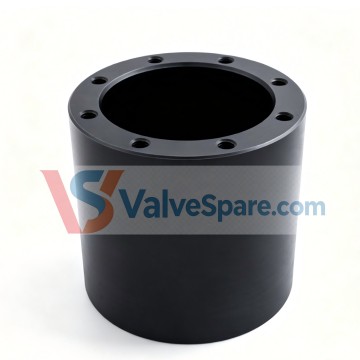
Explore our high-demand precision components engineered for Type FC and FLS slab gate valve systems.
In high-pressure upstream oil and gas operations, wellhead control and safety manifold systems rely heavily on API 6A slab gate valves. These valves operate in environments where pressures regularly exceed 10,000 to 15,000 PSI, and the media is laden with abrasive sand, corrosive hydrogen sulfide (H₂S), carbon dioxide (CO₂), and high-temperature fluids. Under these severe conditions, the structural integrity of the valve components—specifically the gate, seat, stems, and seals—determines the uptime of the entire extraction system.
The API 6A Press Fit Gate Valve utilizes a highly precise interference fit (press fit) mechanism to install seat inserts or critical wear rings into the valve body. This design ensures that the sealing boundary remains absolutely rigid under immense pressure fluctuations, preventing micro-leakage pathways from developing behind the seat. Sourcing reliable repair kits and spares for these specialized components has become a critical focus for oilfield procurement managers seeking to reduce Non-Productive Time (NPT).
Historically, operators were forced to source replacement parts exclusively from original equipment manufacturers (OEMs) at premium prices and with long lead times. Today, the industrial trend has shifted significantly toward high-precision, API-certified aftermarket manufacturers. Companies like Suzhou Kaerman Precision Machinery Co., Ltd. bridge this gap by manufacturing parts that match or exceed OEM tolerances, utilizing advanced thermal spray coatings and premium alloys to extend the service life of critical spares.
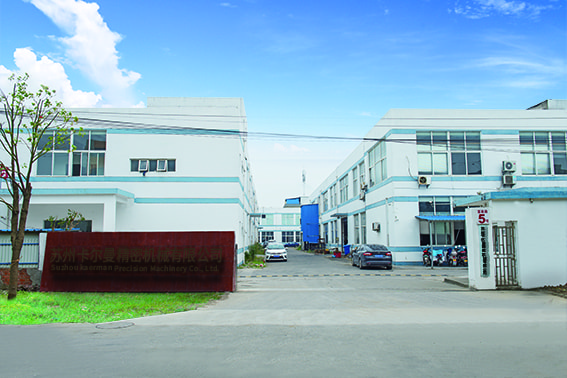
Suzhou Kaerman Precision Machinery Co., Ltd. is a professional manufacturer dedicated to the R&D, production, and sales of high-performance wear-resistant components for the oil & gas industry.
In today's era of convenient internet communication, trust is scarce. We have always stayed true to our original aspiration, crafting valve products with meticulous craftsmanship, and winning recognition from global buyers.
Founded in 2011 in a humble workshop in Suzhou, our core mission was to break the monopoly of foreign high-end valve plates and seats, so that buyers would no longer have to rely on overpriced imported products. Facing industry pain points such as seat seal leakage and high-sulfur corrosion in oilfield applications, we stayed rooted in frontline operations, braving high temperatures and pressures to repeatedly test materials and optimize sealing structures, successfully resolving leakage issues.
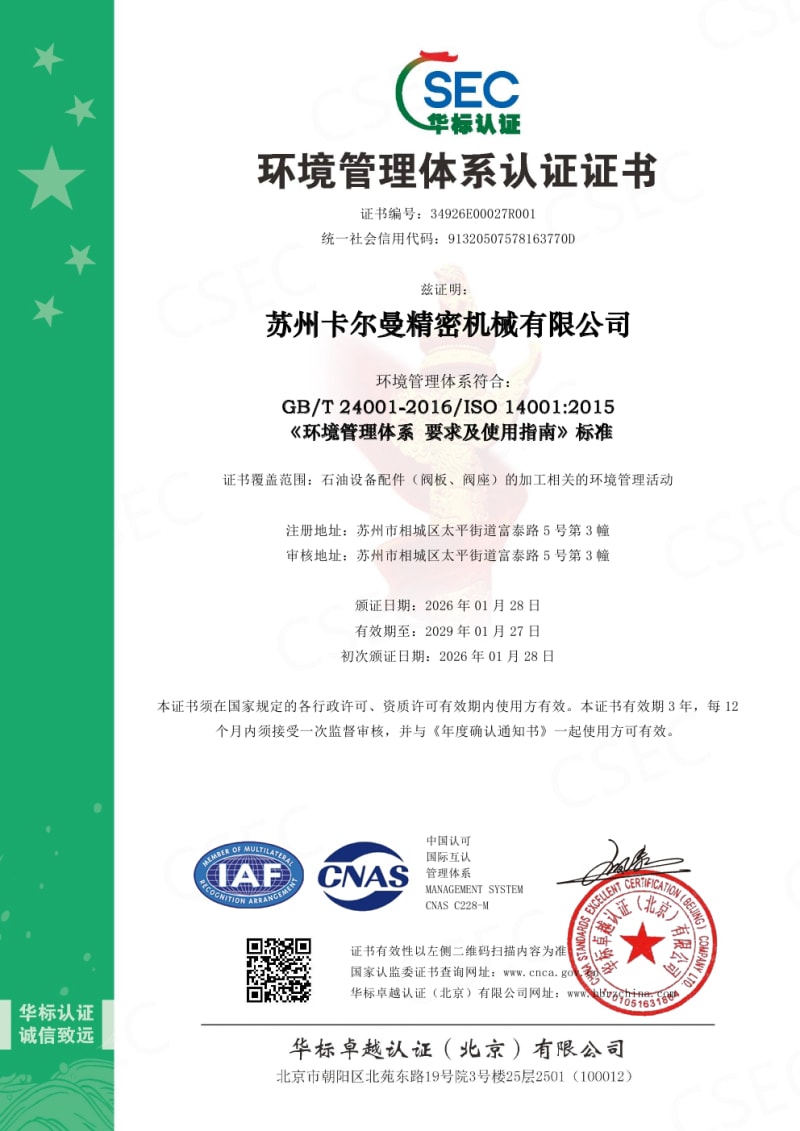
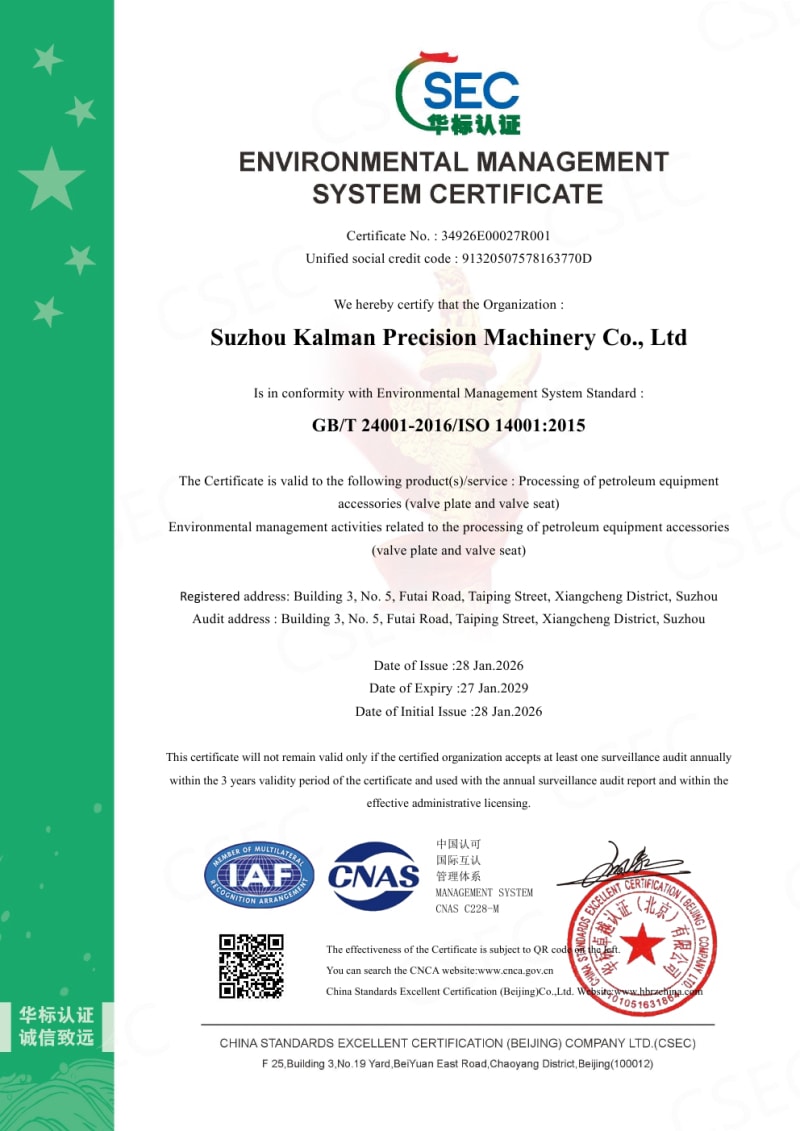
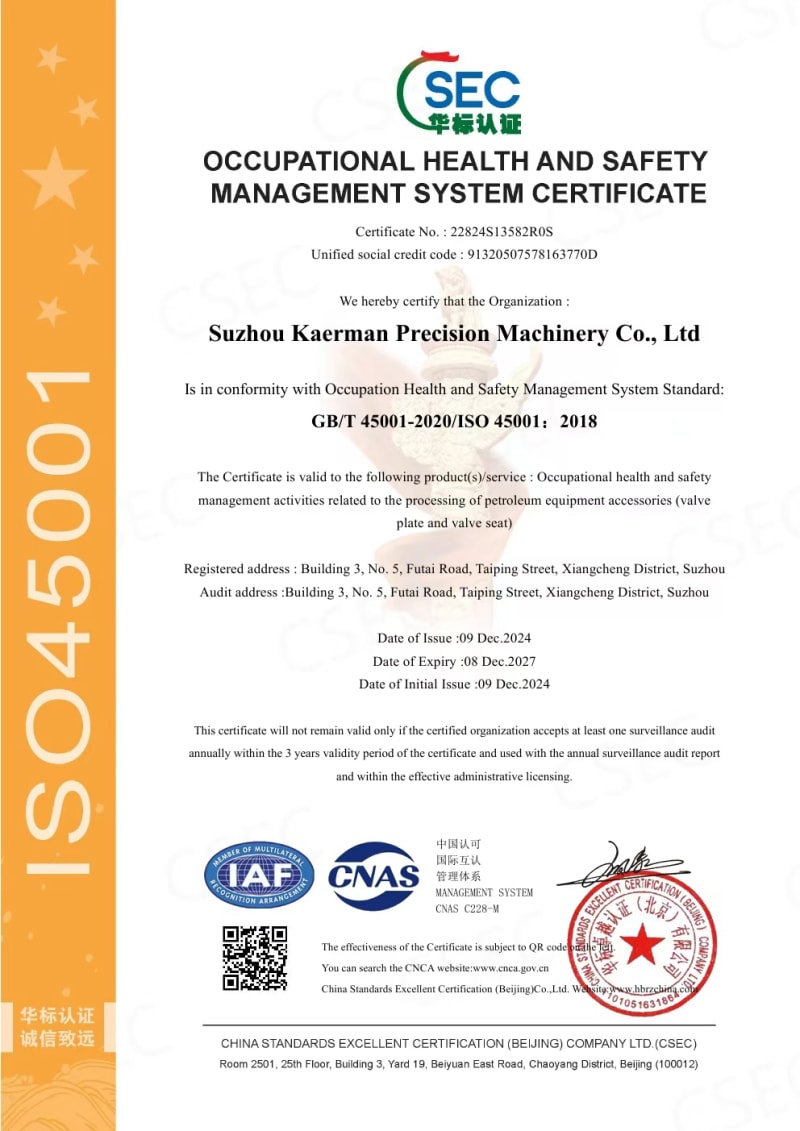
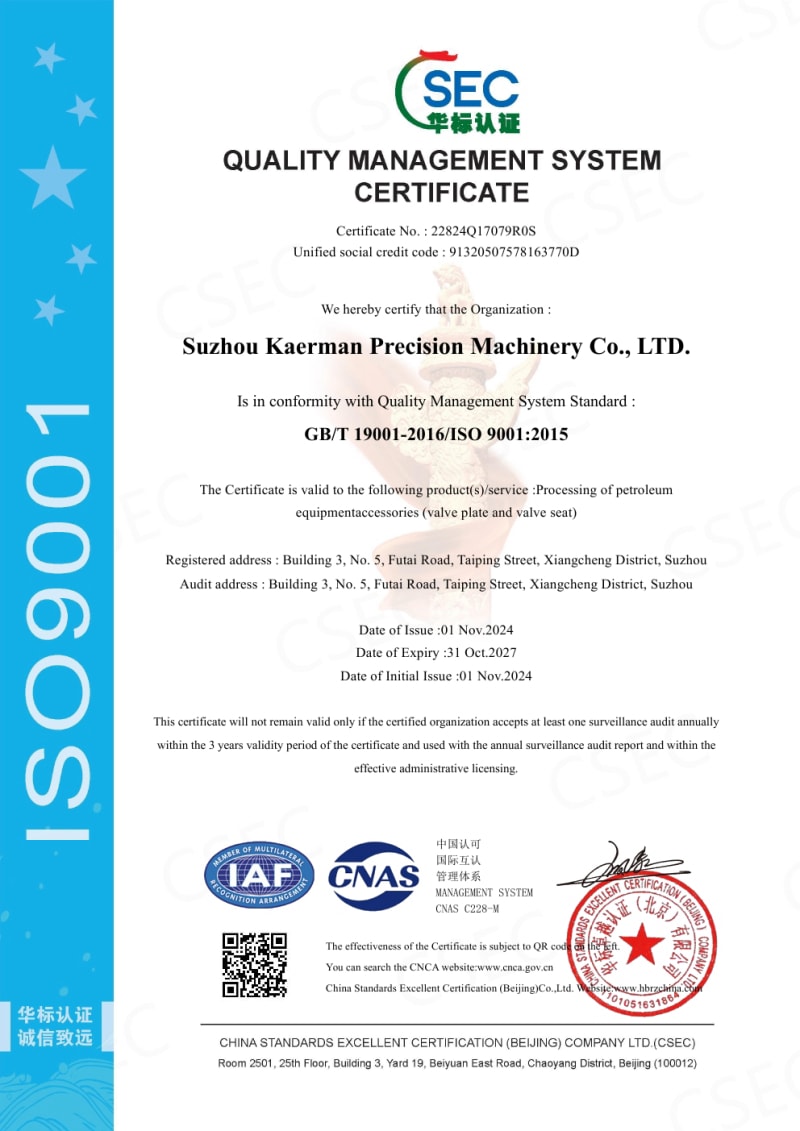
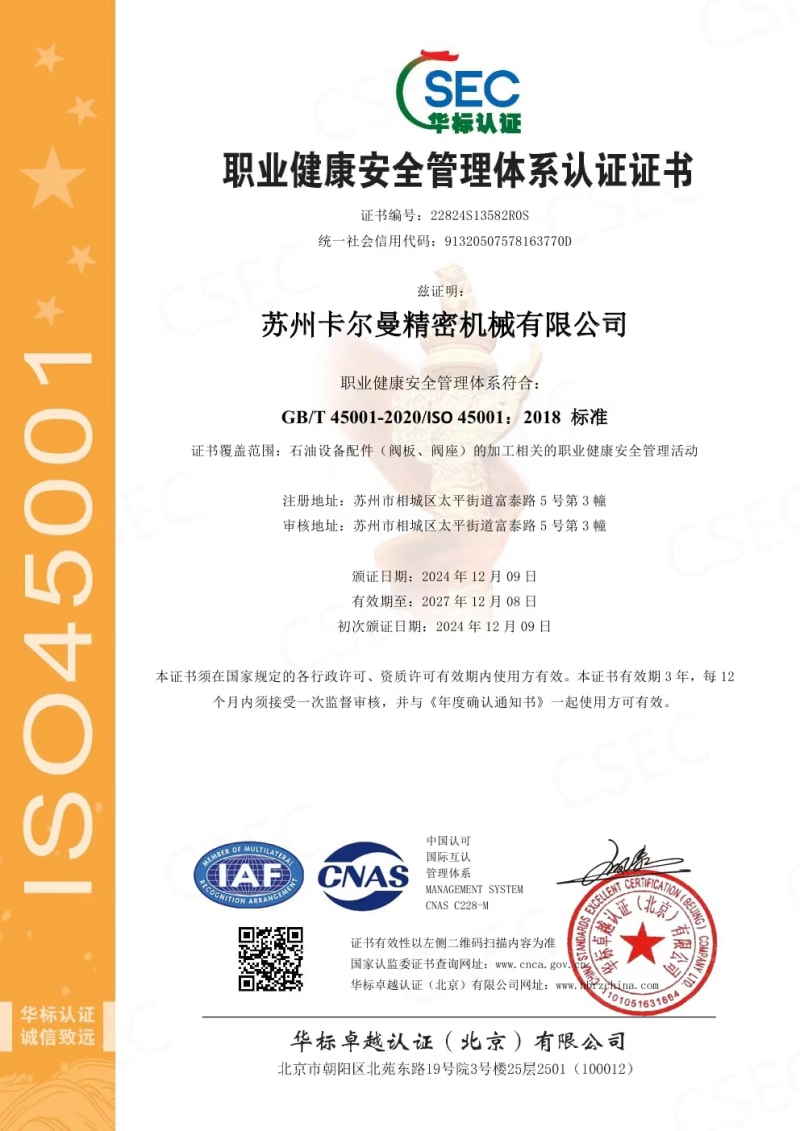
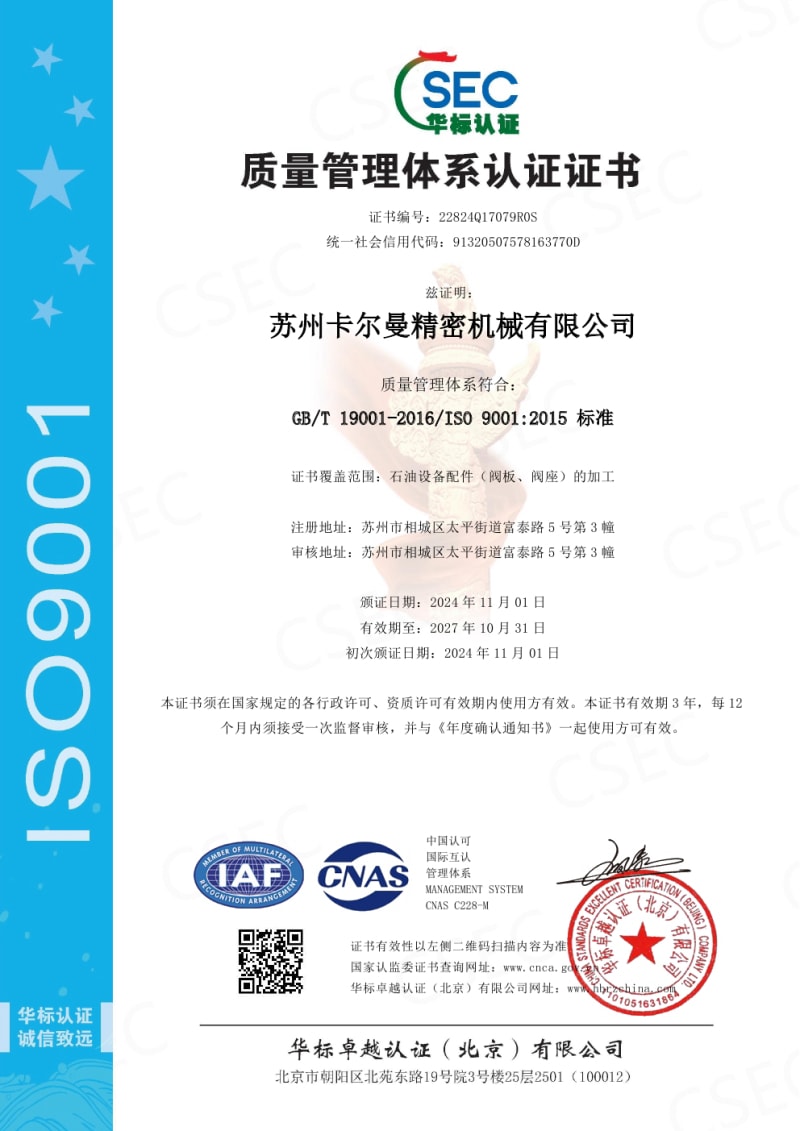
We are deeply committed to quality and have obtained API certification as well as the three management system certifications. From developing only valve plates and seats, we have grown into a partner capable of providing comprehensive solutions. After 15 years of perseverance, we uphold our original aspiration with craftsmanship, and have become a trusted supplier of high-end valve accessories for global buyers through professionalism and sincerity.
We are a team of seasoned engineers and technicians with years of hands-on experience in supersonic flame spraying for petroleum machinery. All core operators receive systematic professional training, bringing deep expertise in thermal spray technology and quality control.
We specialize in manufacturing precision wear-resistant parts (including valve gates, wellhead components, and sealing parts) using advanced PRAXAIR TAFA JP8000 supersonic flame spraying equipment. We customize coating processes and parameters for different products to deliver exceptional performance under extreme working conditions.
Our infrastructure, global footprint, and quality benchmarks demonstrate why we are the preferred partner for oilfield valve spares.
At Suzhou Kaerman, we believe that high-performance valves are built from the molecular level up. Our engineering division focuses on two critical aspects of component manufacturing: precise substrate geometry and advanced surface modification.
The primary degradation mechanism for slab gate valve gates and seats in oilfield environments is a combination of sliding wear and chemical corrosion. To combat this, we implement High-Velocity Oxygen-Fuel (HVOF) thermal spraying using the industry-standard PRAXAIR TAFA JP8000 system.
This method accelerates micro-sized powder particles (typically Tungsten Carbide-Cobalt-Chromium or Nickel-based alloys) to supersonic velocities (exceeding Mach 3). Upon impact with the 410 Stainless Steel or low-alloy steel substrate, these particles deform plastically, creating an incredibly dense coating with bond strengths exceeding 10,000 PSI and porosity levels below 1%. This coating acts as an impenetrable shield against abrasive mud, sand-laden fracking fluids, and corrosive gases.
The press-fit design in API 6A gate valves represents a mechanical engineering milestone. By utilizing thermal expansion (shrink-fitting) or high-tonnage hydraulic presses, components like seat rings are locked into the valve body with tight interference fits. This eliminates the need for threaded connections, which are notorious for stress concentration and thread corrosion.
Our manufacturing facility utilizes computer-controlled machining centers (CNC) to achieve tolerances within +/- 0.005mm. This ensures that when our customers source our repair kits, the seats slide in and lock with perfect alignment, ensuring bubble-tight sealing (API 6A PSL 3/3G requirements) during field operations.
We directly address the critical pain points faced by oilfield operators, service companies, and valve repair shops globally.
Our products are manufactured under strict API 6A and ISO quality management guidelines, ensuring absolute safety for high-risk operations.
Modern oil and gas procurement is no longer just about finding the lowest price. It is about total cost of ownership (TCO) and supply chain resilience. When sourcing API 6A press fit gate valve repair kits, procurement teams must evaluate several critical factors:
As the energy sector moves toward harsher, deeper reservoirs (HPHT and ultra-deepwater), the demand for smart, wear-resistant components is growing. We are currently researching the integration of nano-structured carbide coatings and advanced laser cladding technologies. These innovations will allow repair kits to last up to three times longer than standard hardfacing, drastically reducing the frequency of well interventions and enhancing safety across global oilfields.
Browse our full range of replacement parts, including gates, stems, retainer plates, and sealing elements designed for quick field repairs.