Leave Your Message
-
Contact WhatsApp
-
 Contact Phone
-
 Contact Email

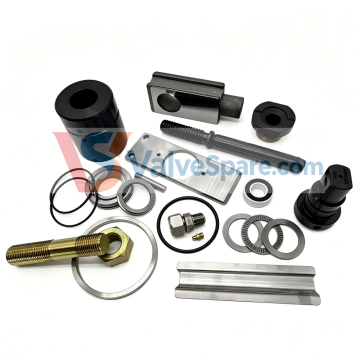
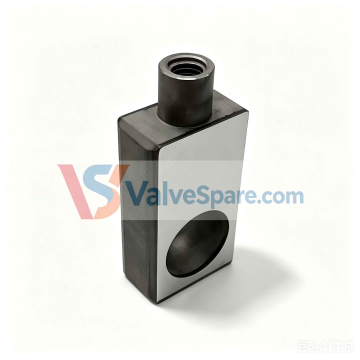
The oil and gas industry in the United States demands the highest standards of safety, reliability, and performance. At the heart of upstream wellhead systems and Christmas trees lies the API 6A seal gate valve. Designed to control flow under extreme pressures—often exceeding 10,000 to 15,000 psi—these valves are critical to preventing catastrophic failures and blowout scenarios. As the U.S. continues to lead global hydrocarbon production through unconventional shale plays and deepwater exploration, the market for high-quality API 6A gate valves, replacement seals, and repair kits has experienced unprecedented growth.
In major American oil basins such as the Permian Basin in West Texas and New Mexico, the Bakken Formation in North Dakota, and the Eagle Ford Group in South Texas, operators face harsh downhole and surface conditions. These environments are characterized by high concentrations of hydrogen sulfide (H2S), carbon dioxide (CO2), and abrasive hydraulic fracturing proppants. Consequently, standard valves fail rapidly. Local operators and service companies rely heavily on API 6A slab gate valves equipped with premium sealing components—such as Teflon-energized ID face seals and SLS spring-energized seals—to ensure long-term integrity and minimize costly downtime.
Furthermore, in the deepwater Gulf of Mexico, offshore production platforms operate under extreme environmental regulations and high-pressure, high-temperature (HPHT) conditions. A single valve failure offshore can cost millions of dollars in lost production and remediation. This risk drives the demand for API 6A manufacturers who can supply gate valves with advanced coating technologies, such as Tungsten Carbide (WC-Co-Cr) applied via High-Velocity Oxygen Fuel (HVOF) thermal spraying, guaranteeing a mirror finish (Ra < 0.1) and a porosity of less than 1%.
Industry Insight: According to recent U.S. energy infrastructure reports, over 40% of wellhead equipment failures are attributed to sealing degradation in gate valves. Upgrading to high-integrity SLS and Teflon face seals drastically reduces maintenance cycles in horizontal drilling operations.
U.S.-based valve manufacturers and global suppliers are shifting rapidly toward digitalization and advanced materials. One major trend is the development of smart valves integrated with IoT sensors that monitor sealing integrity and pressure differentials in real-time. However, the physical sealing mechanism remains the most crucial element. The transition from traditional elastomeric seals to advanced thermoplastic compounds (like modified PTFE, PEEK, and Devlon) has enabled valves to perform consistently across a wider temperature range (-50°F to 350°F or API Temperature Classifications L through U).
Another technological milestone is the refinement of metal-to-metal sealing systems. In high-pressure applications, relying solely on soft seals is insufficient. The gate and seat interfaces must form a perfect metal-to-metal barrier. This is achieved by utilizing precision-machined slab gate plates and seat rings coated with wear-resistant alloys. By maintaining a bond strength exceeding 75MPa and surface hardness up to HV1500, these valves resist the scouring action of sand, drilling muds, and corrosive fluids, setting a new benchmark for operational longevity.
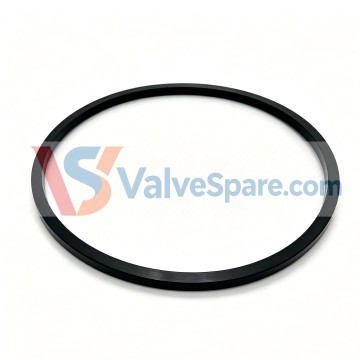
For American oilfield service companies, lead times are everything. When a gate valve on a producing well starts leaking, getting a replacement major repair kit or stem assembly immediately is vital. This has led to the establishment of robust distribution networks and localized manufacturing hubs across Texas, Louisiana, and Oklahoma. By stocking critical spare parts—including bonnet seal ring gaskets, body bushings, and reverse-acting gates—manufacturers ensure that operators can rebuild their FLS and FC type valves on-site without waiting weeks for overseas shipments. This localized support network is a cornerstone of the U.S. shale revolution's operational efficiency.
Our core competitive advantage lies in industry-leading coating technology and strict quality control:
To be the most trusted long-term partner for our global customers. We envision a future where our advanced coating technologies eliminate downtime and maintenance costs for oilfield equipment. By mastering precision manufacturing, we strive to empower our clients to overcome the challenges of high pressure, corrosion, and severe wear.
To become the world's leading supplier of high-performance wear-resistant solutions for the oil & gas industry. We aim to set the global standard for thermal spray technology, enabling our customers to achieve higher efficiency, longer service life, and safer operations in extreme downhole environments.