Leave Your Message
-
Contact WhatsApp
-
 Contact Phone
-
 Contact Email
Precision-engineered replacement parts and assemblies designed to meet rigorous US oilfield operational specifications.


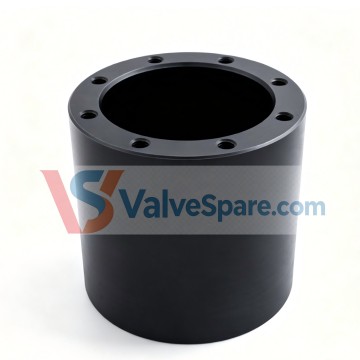
The United States oil and gas industry remains a global powerhouse, driven by intensive operations in prolific shale basins such as the Permian Basin in Texas and New Mexico, the Bakken in North Dakota, and the Marcellus and Eagle Ford plays. Simultaneously, deepwater exploration in the Gulf of Mexico pushes the limits of high-pressure, high-temperature (HPHT) extraction. Within these demanding environments, wellhead integrity and flow control reliability are paramount. The API 6A standard, established by the American Petroleum Institute, governs the design, manufacturing, and testing of wellhead and Christmas tree equipment. Among the most critical components in these systems is the API 6A Split Gate Valve.
Unlike standard slab gate valves, the split gate design features a two-piece gate assembly. When operated, these gate halves expand mechanically against the valve seats at the end of the stroke to establish a positive, bubble-tight mechanical seal. This unique mechanism makes them highly sought after by US operators who require reliable, bidirectional sealing in low and high-pressure applications alike. As hydraulic fracturing operations in the US demand higher cycle rates and withstand abrasive slurry flowbacks, the need for robust split gate valves and their wear-resistant internal components has reached unprecedented heights.
API 6A certification guarantees that valves and replacement parts can endure extreme pressures up to 15,000 psi (and even 20,000 psi in next-generation fields) and temperatures ranging from -75°F to 350°F. For American drilling and production companies, complying with API 6A is not just about performance; it is a critical safety and environmental requirement regulated by federal and state authorities, including the Bureau of Safety and Environmental Enforcement (BSEE) in offshore operations.
The US flow control industry is undergoing a significant transformation. Operators are focusing heavily on ESG (Environmental, Social, and Governance) metrics, aiming to eliminate fugitive emissions from wellheads. This has led to strict requirements for valve packing materials and stem designs. Additionally, the rapid expansion of enhanced oil recovery (EOR) projects using CO2 injection, as well as acid gas disposal wells, has dramatically increased the corrosiveness of the media passing through these valves. Consequently, there is a booming demand for advanced corrosion-resistant alloys (CRAs) and specialized coatings like tungsten carbide (WC) applied via Supersonic Flame Spraying (HVOF).
Another major trend is the supply chain localization and diversification strategy adopted by US procurement managers. While domestic manufacturing remains strong, cost pressures and the need for rapid deployment have led US distributors and service providers to seek highly certified, reliable international factories capable of supplying API 6A compliant components. These components must match or exceed the performance of original equipment manufacturers (OEMs) like Cameron, FMC, and Schlumberger, but at a more competitive price point and with shorter lead times.
Building trust through precision engineering and field-proven reliability since 2011.
In today's era of convenient internet communication, trust is scarce. We have always stayed true to our original aspiration, crafting valve products with meticulous craftsmanship, and winning recognition from global buyers.
Founded in 2011 in a humble workshop in Suzhou, our core mission was to break the monopoly of foreign high-end valve plates and seats, so that buyers would no longer have to rely on overpriced imported products. Facing industry pain points such as seat seal leakage and high-sulfur corrosion in oilfield applications, we stayed rooted in frontline operations, braving high temperatures and pressures to repeatedly test materials and optimize sealing structures, successfully resolving leakage issues.
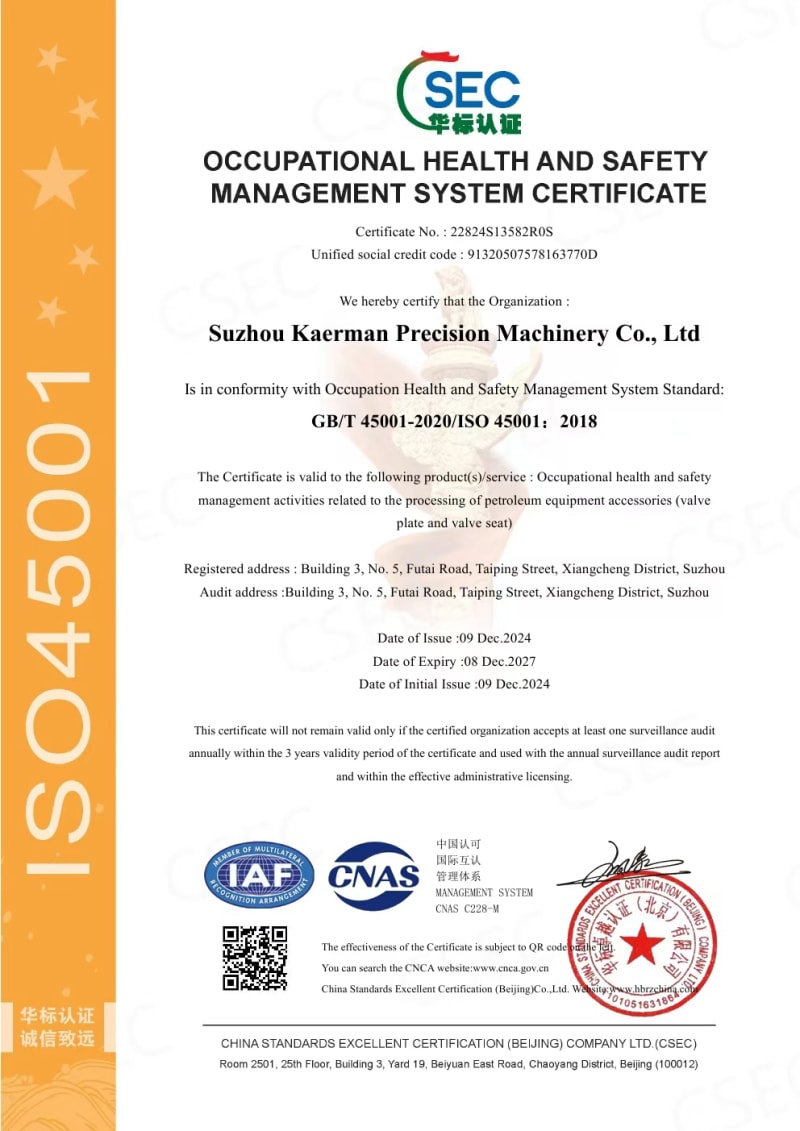
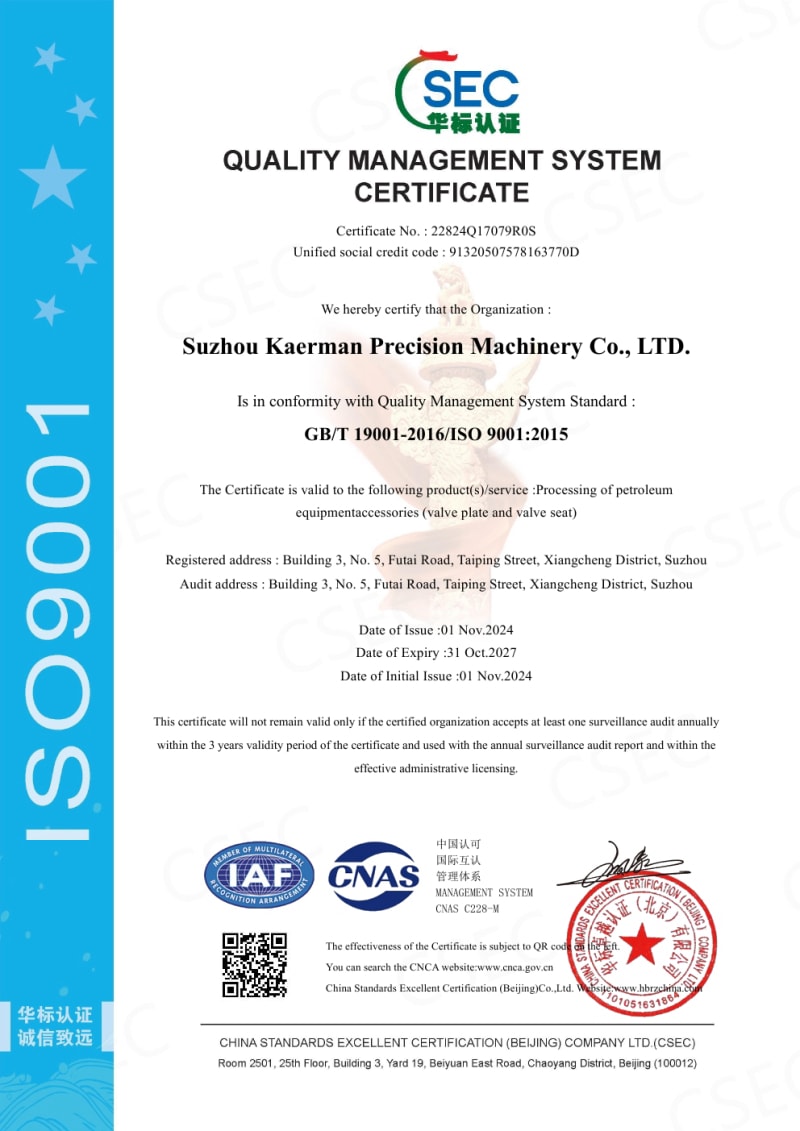
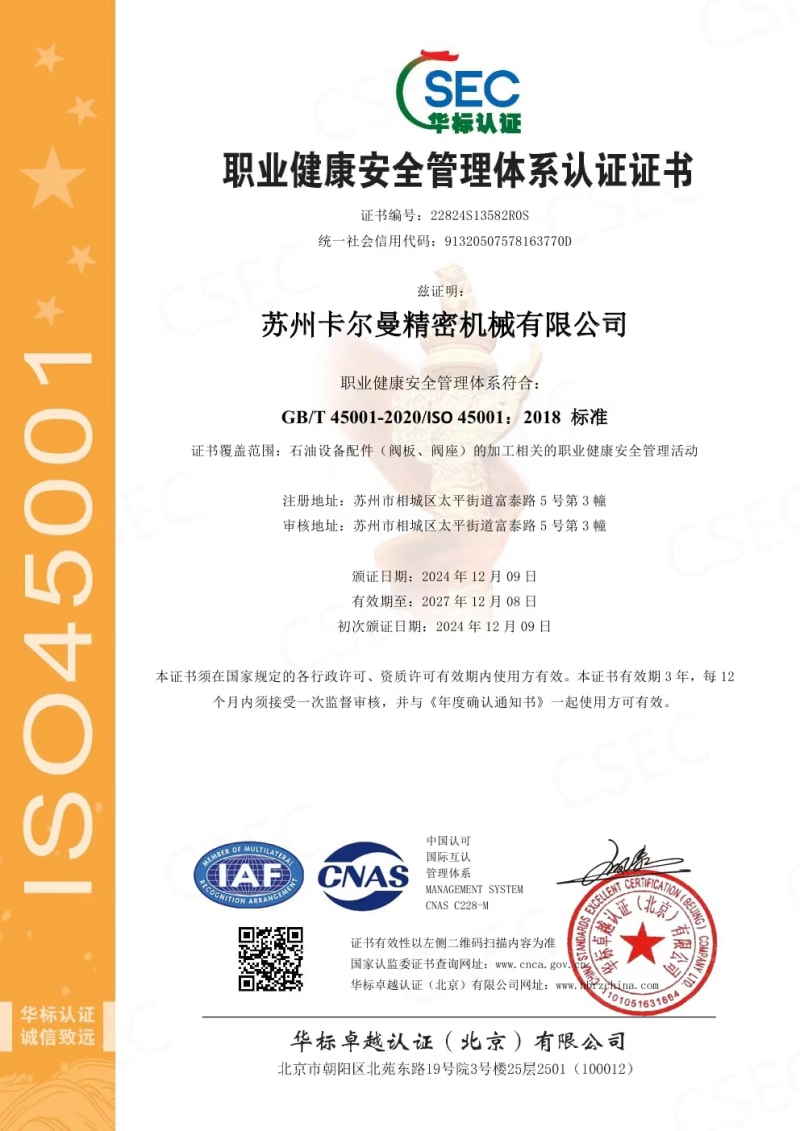
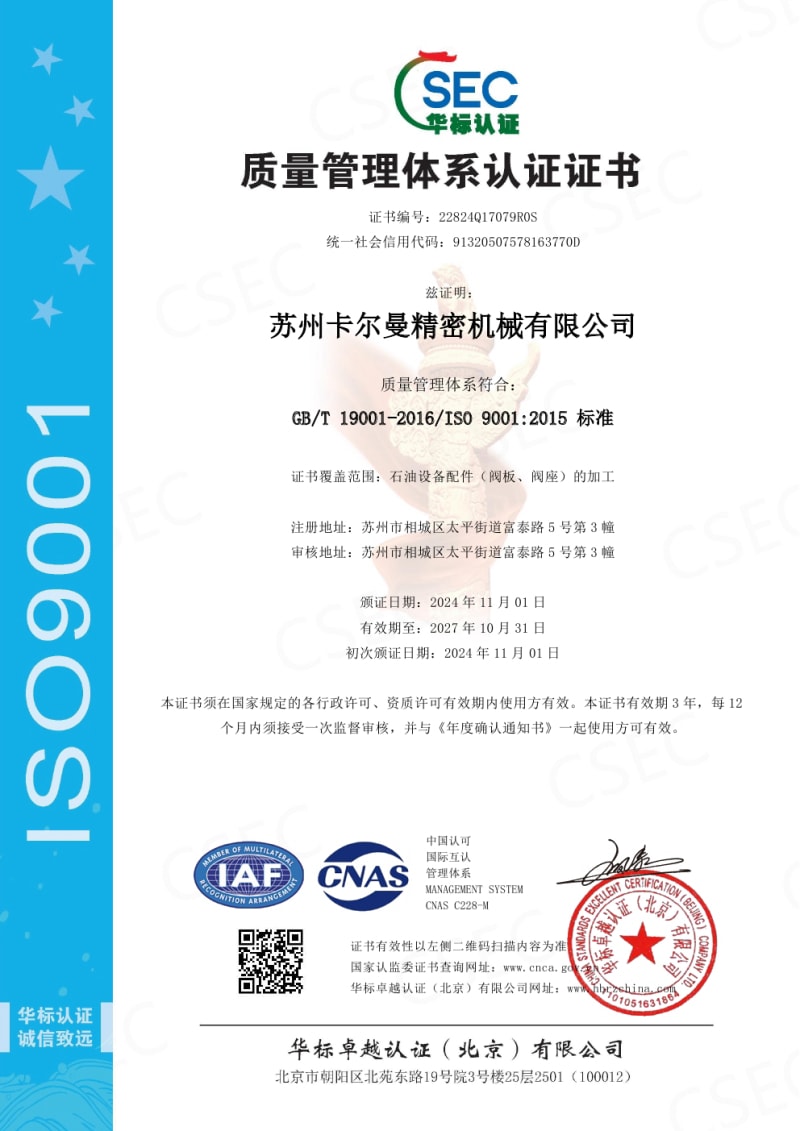
We are deeply committed to quality and have obtained API certification as well as the three management system certifications. From developing only valve plates and seats, we have grown into a partner capable of providing comprehensive solutions.
After 15 years of perseverance, we uphold our original aspiration with craftsmanship, and have become a trusted supplier of high-end valve accessories for global buyers through professionalism and sincerity.
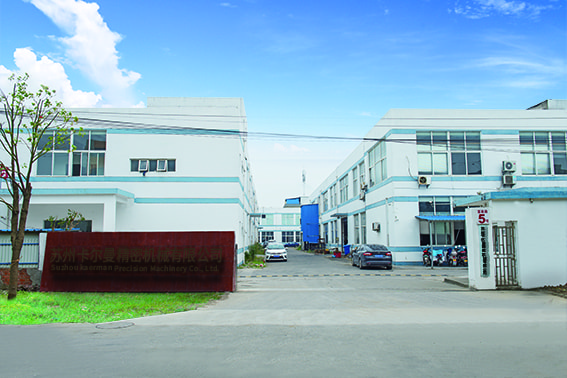
We are a professional manufacturer dedicated to the R&D, production, and sales of high-performance wear-resistant components for the oil & gas industry.
We are a team of seasoned engineers and technicians with years of hands-on experience in supersonic flame spraying for petroleum machinery. All core operators receive systematic professional training, bringing deep expertise in thermal spray technology and quality control.
We specialize in manufacturing precision wear-resistant parts (including valve gates, wellhead components, and sealing parts) using advanced PRAXAIR TAFA JP8000 supersonic flame spraying equipment. We customize coating processes and parameters for different products to deliver exceptional performance under extreme working conditions.
Proven capacity and global reach backed by rigorous standards.
We solve critical pain points for oil & gas operators in the United States and globally:
In the high-pressure frac spreads of West Texas, valve components are subjected to intense mechanical stress and erosion. The choice between a slab gate and a split gate valve often depends on the specific operational phase. While slab gate valves feature a simple, single-piece design that is highly effective for general high-pressure flow control, they rely heavily on the fluid pressure to push the gate against the downstream seat to achieve a seal. In low-pressure scenarios, or during pressure transitions, this can sometimes lead to micro-leakage.
The API 6A Split Gate Valve addresses this by utilizing a mechanical wedging action. As the valve is closed, the stem forces the split gate halves against the internal body wedge, expanding them outward against both the upstream and downstream seats. This dual-sealing action ensures that the valve remains completely sealed regardless of line pressure. For US service companies managing flowback operations, where sand, proppants, and chemical additives are recovered, the split gate's mechanical seal prevents abrasive particles from migrating behind the seats, significantly reducing internal erosion and extending the run-time of the wellhead assembly.
To withstand the abrasive nature of US shale plays, Kaerman utilizes state-of-the-art PRAXAIR TAFA JP8000 supersonic flame spraying systems. By accelerating powder particles to supersonic velocities, we achieve coating densities exceeding 99% with exceptional bond strengths (often surpassing 10,000 psi). We apply specialized Tungsten Carbide (WC-Co-Cr) and Nickel-Chromium coatings to the gate and seat sealing interfaces. This metallurgical barrier prevents micro-welding, galling, and chemical attacks in high-H2S environments, ensuring that the split gate valve operates smoothly throughout its service life without sticking or locking up.
Our products undergo rigorous testing and international audits to ensure complete compliance with API and ISO standards.
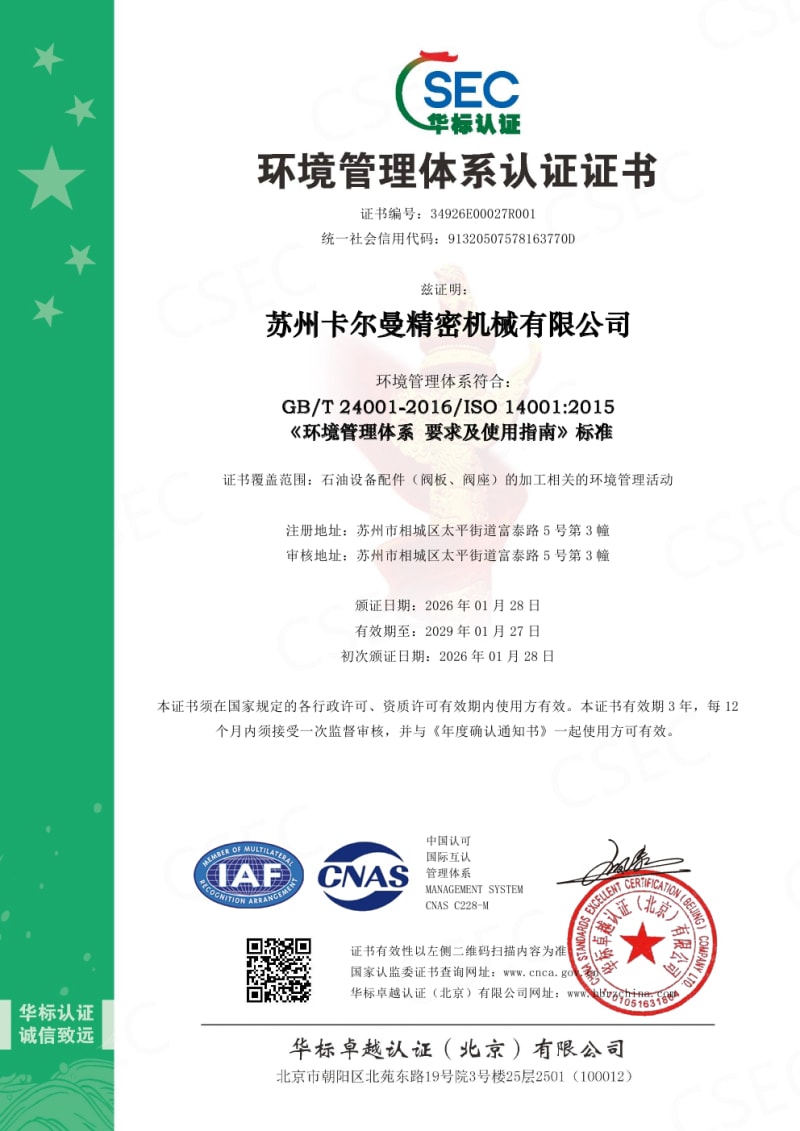
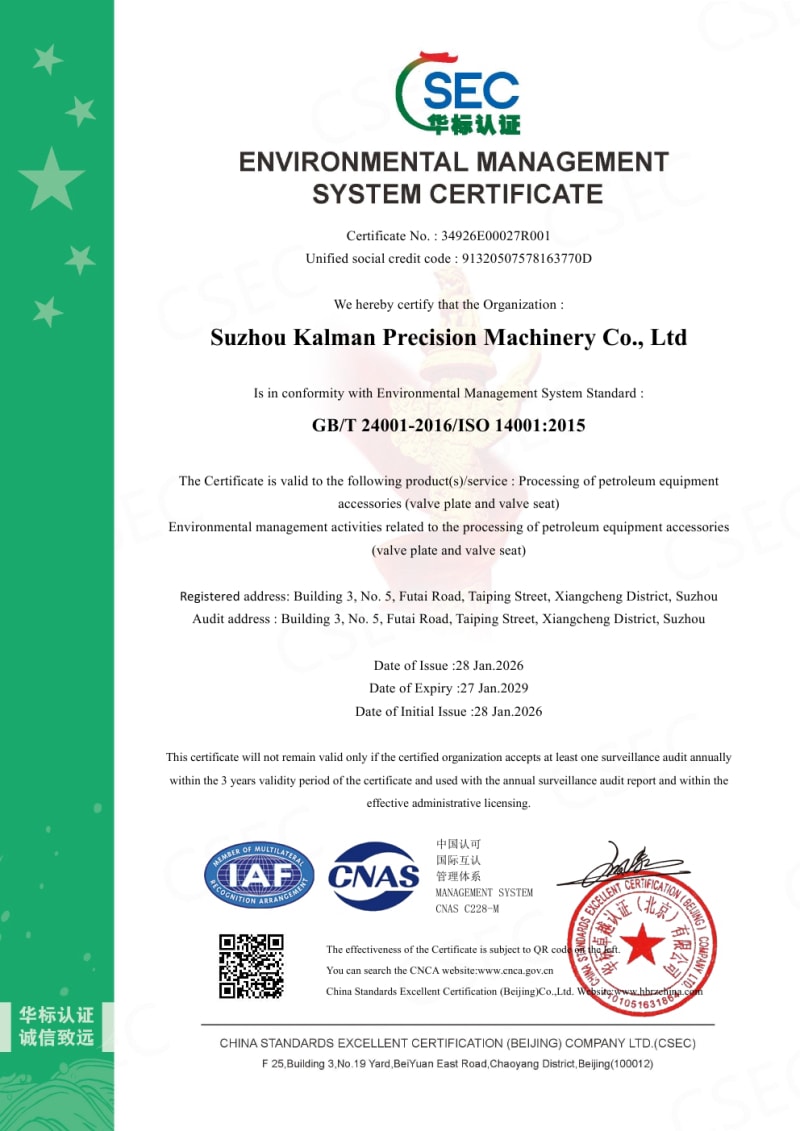
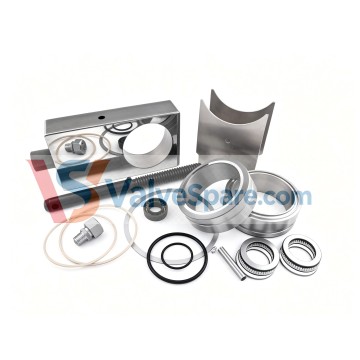
Explore our full line of wear-resistant components, seals, and rebuild kits engineered for North American oilfield service applications.