Leave Your Message
-
Contact WhatsApp
-
 Contact Phone
-
 Contact Email
Direct-replacement flow control valve parts engineered for quick field integration during offshore platform and subsea manifold maintenance windows.
Why the API 6A valve seat remains the paramount failure point and value driver in platform flow control valve integrity campaigns.
In offshore hydrocarbon extraction across the North Sea, Gulf of Mexico, Santos Basin, and Persian Gulf, offshore flow control valves installed within Christmas trees, choking manifolds, and riser topside ESD (Emergency Shutdown) loops are subjected to punishing conditions. Operating under API 6A pressure classifications spanning 5,000 psi to 20,000 psi (15K and 20K systems), these flow barriers face continuous multiphase effluent containing abrasive frac sand, high-velocity gas condensate, acidic wet sour gas ($H_2S$), and dissolved carbon dioxide ($CO_2$).
When an offshore wellhead gate valve suffers seat-to-gate seal breakdown, operators cannot simply dispatch a maintenance van. Deepwater semi-submersible platform shutdown costs can easily eclipse $500,000 to $1,000,000 per day in deferred production and specialized intervention logistics. Consequently, planned flow control valve overhauls require replacement API 6A valve seats that do not just conform to baseline dimensional drawings, but surpass standard metallurgy through specialized thermal coatings, micro-finished sealing faces, and stringent gas-tight integrity qualifications.
Overhaul seats require optical flatness within 1-2 helium light bands and surface finishes finer than Ra 0.1 μm to guarantee bi-directional zero-leakage shutoff under gas-backed hydrostatic testing.
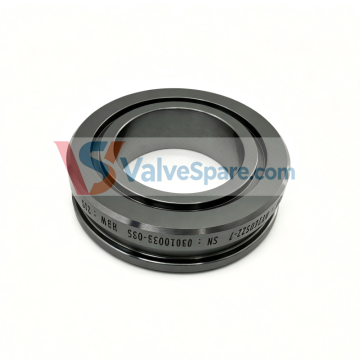
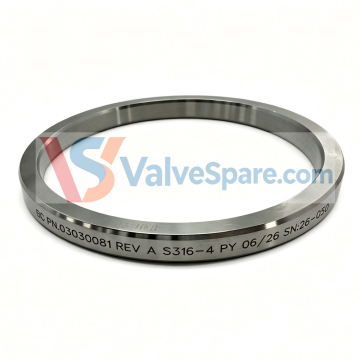
Conforming to NACE MR0175 / ISO 15156, valve seats feature high-alloy substrate cores (AISI 4130, 410 SST, or Inconel 718) shielded by supersonic HVOF tungsten carbide or Stellite hardfacing.
Standardized interchangeability with major OEM architectures (Cameron Type FC, FLS, FLS-R) enables brownfield offshore operators to complete turnaround schedules without unexpected retrofit machining.
During routine valve stripping on offshore supply vessels or shore-based valve servicing facilities, valve seats demonstrate specific failure profiles:
1. Solid-Particle Erosion and Jet Cutting: When high-pressure flow loops throttle or open against a delta-P of several thousand psi, micro-cavitation and sand-induced scour create washouts along the seat bore chamfer. Once fluid cuts a microscopic fissure through the sealing boundary, seat degradation accelerates exponentially.
2. Galling & Interface Micro-Welding: Under extreme differential mechanical loading, metal-to-metal contact between the gate slab and the stationary seat ring can seize without proper lubricity and hardened carbide barriers, destroying gate-to-seat contact integrity.
3. Stress Corrosion Cracking (SCC) & Pitting: Chloride-laden marine environments combined with sour brine induce localized micro-pitting behind the seat pocket and around secondary elastomer/PEEK seal tracks, demanding strict material certification during valve rebuilds.
In today's era of convenient internet communication, trust is scarce. We have always stayed true to our original aspiration, crafting valve products with meticulous craftsmanship, and winning recognition from global buyers.
Founded in 2011 in a humble workshop in Suzhou, our core mission was to break the monopoly of foreign high-end valve plates and seats, so that buyers would no longer have to rely on overpriced imported products. Facing industry pain points such as seat seal leakage and high-sulfur corrosion in oilfield applications, we stayed rooted in frontline operations, braving high temperatures and pressures to repeatedly test materials and optimize sealing structures, successfully resolving leakage issues.
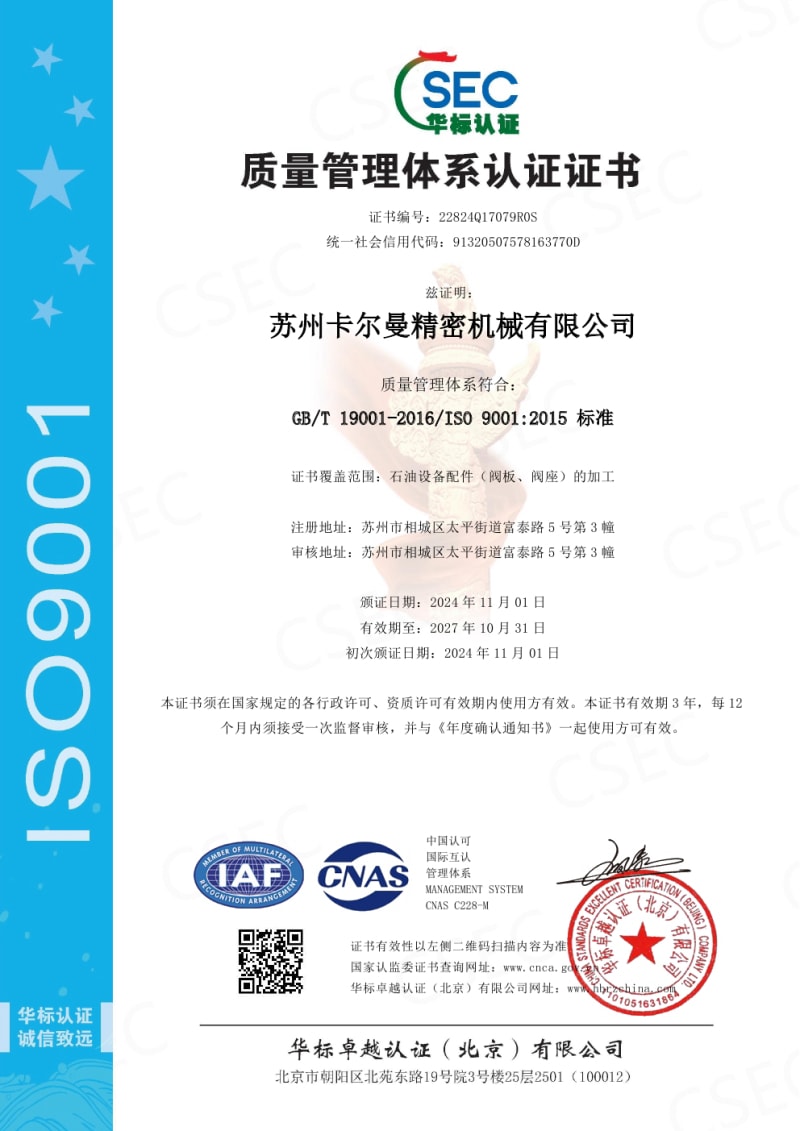
We are deeply committed to quality and have obtained API certification as well as the three management system certifications. From developing only valve plates and seats, we have grown into a partner capable of providing comprehensive solutions.
After 15 years of perseverance, we uphold our original aspiration with craftsmanship, and have become a trusted supplier of high-end valve accessories for global buyers through professionalism and sincerity.
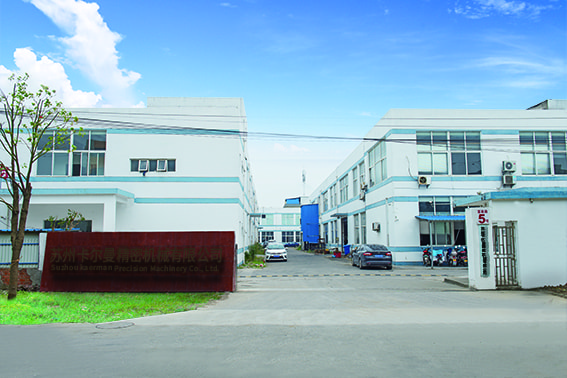
We are a team of seasoned engineers and technicians with years of hands-on experience in supersonic flame spraying for petroleum machinery. All core operators receive systematic professional training, bringing deep expertise in thermal spray technology and quality control.
We specialize in manufacturing precision wear-resistant parts (including valve gates, wellhead components, and sealing parts) using advanced PRAXAIR TAFA JP8000 supersonic flame spraying equipment. We customize coating processes and parameters for different products to deliver exceptional performance under extreme working conditions.
We solve critical pain points for oil & gas operators:
Deploying Praxair TAFA JP8000 systems to achieve ultra-dense, low-porosity carbide claddings that survive repetitive dynamic cycling.
During flow control valve overhauls, replacing damaged OEM seats with sub-par nitrided or flash-plated components leads to catastrophic early-life failure. At Suzhou Kaerman Precision Machinery, our high-velocity oxy-fuel (HVOF) thermal spray cell employs genuine PRAXAIR TAFA JP8000 kerosene-oxygen systems. By accelerating Tungsten Carbide / Cobalt / Chrome ($WC-10Co-4Cr$) particles to supersonic speeds (>1000 m/s) at controlled thermal profiles, our process yields metallurgical coatings characterized by:
• Micro-Hardness Exceeding 1200 - 1400 HV0.3: Providing exceptional scratch resistance against crushed quartz frac sand and drill cuttings carried in high-velocity gas lines.
• Porosity Under 0.5%: Eliminating micro-capillary pathways that allow sour wet gas to penetrate the coating and cause substrate interfacial corrosion.
• Adhesion Bond Strength Surpassing 70 MPa (10,000+ psi): Preventing spalling, delamination, or chipping during dynamic valve opening across severe pressure differentials.
A valve seat cannot be viewed in isolation. True bi-directional sealing in Cameron Type FC, FLS, and similar slab gate architectures relies entirely on the kinematic harmony between the gate face and seat face. Suzhou Kaerman provides matched sets where valve seats and plates are precision-lapped together. Using diamond suspension abrasives on automated planetary lapping systems, our technicians achieve surface parallelism within fractions of a mil and optical flatness verified under monochromatic helium light sources. This level of craftsmanship ensures instant bubble-tight shutoff during API 6A PR2 gas testing, eliminating the extended "wear-in" cycles often required by lower-grade aftermarket spares.
Integrating materials intelligence and predictive overhaul strategies into brownfield offshore oil and gas developments.
Every overhaul seat and gate plate receives laser-etched 2D data-matrix serialization, tying back directly to raw heat treatment records, ultrasonic inspection certificates, and coating run logs for frictionless asset integrity audits.
Next-wave R&D focuses on nanostructured tungsten carbide matrices and cobalt-free binder systems designed to eliminate micro-galvanic cell corrosion in aggressive marine subsea carbon capture, utilization, and storage (CCUS) wells.
With 3 centralized manufacturing facilities spanning China and Vietnam, Suzhou Kaerman protects global offshore drilling contractors against single-source geopolitical disruptions and lengthy supply-chain chokeholds.
In high-pressure offshore operations, valve seats are the last physical wall guarding human lives, subsea ecosystems, and billion-dollar facilities against catastrophic hydrocarbon blowouts. Overhauling API 6A flow control valves with Suzhou Kaerman's precision-engineered valve seats and internal trim sets guarantees extended operational longevity, absolute pressure integrity, and verifiable return on maintenance investment across the world's most demanding offshore oilfields.
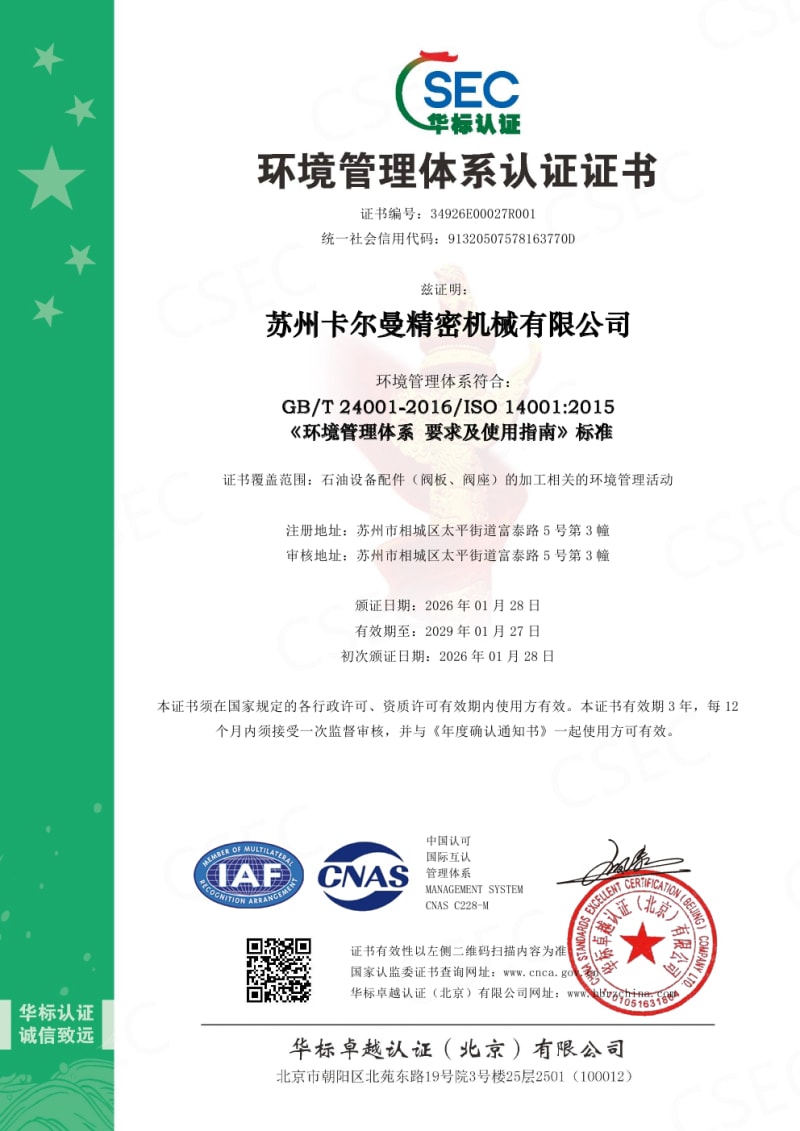
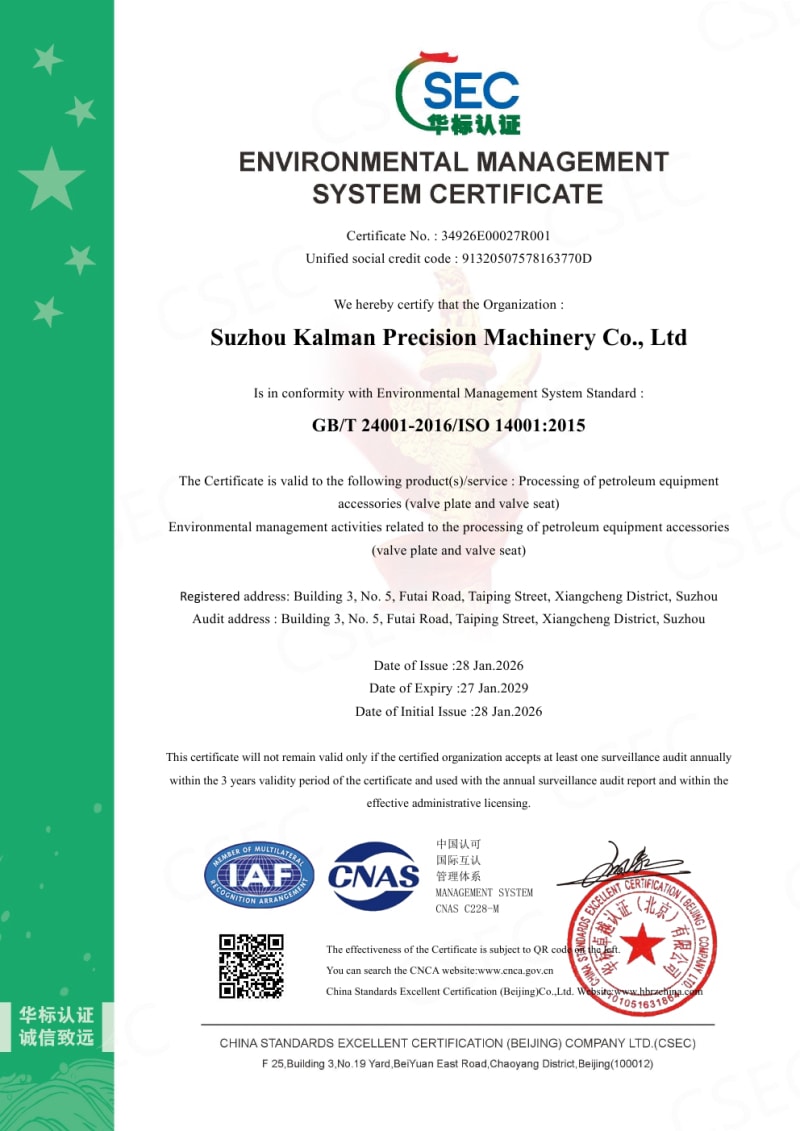
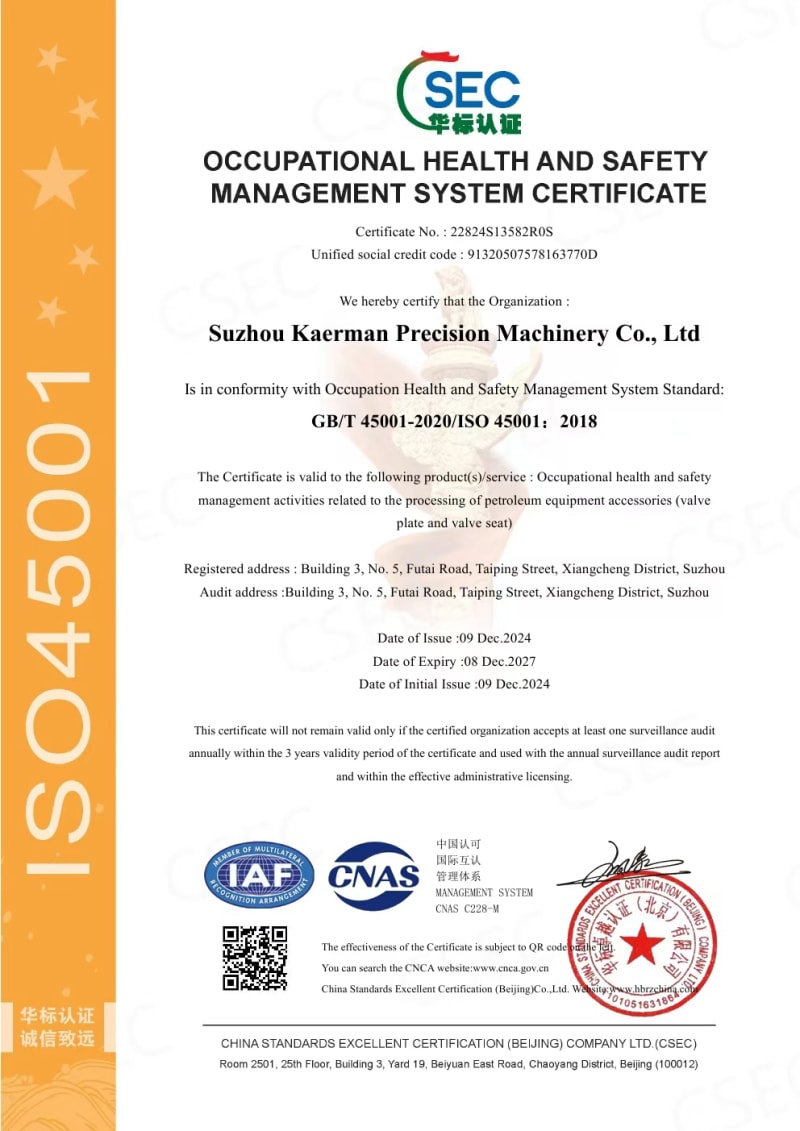
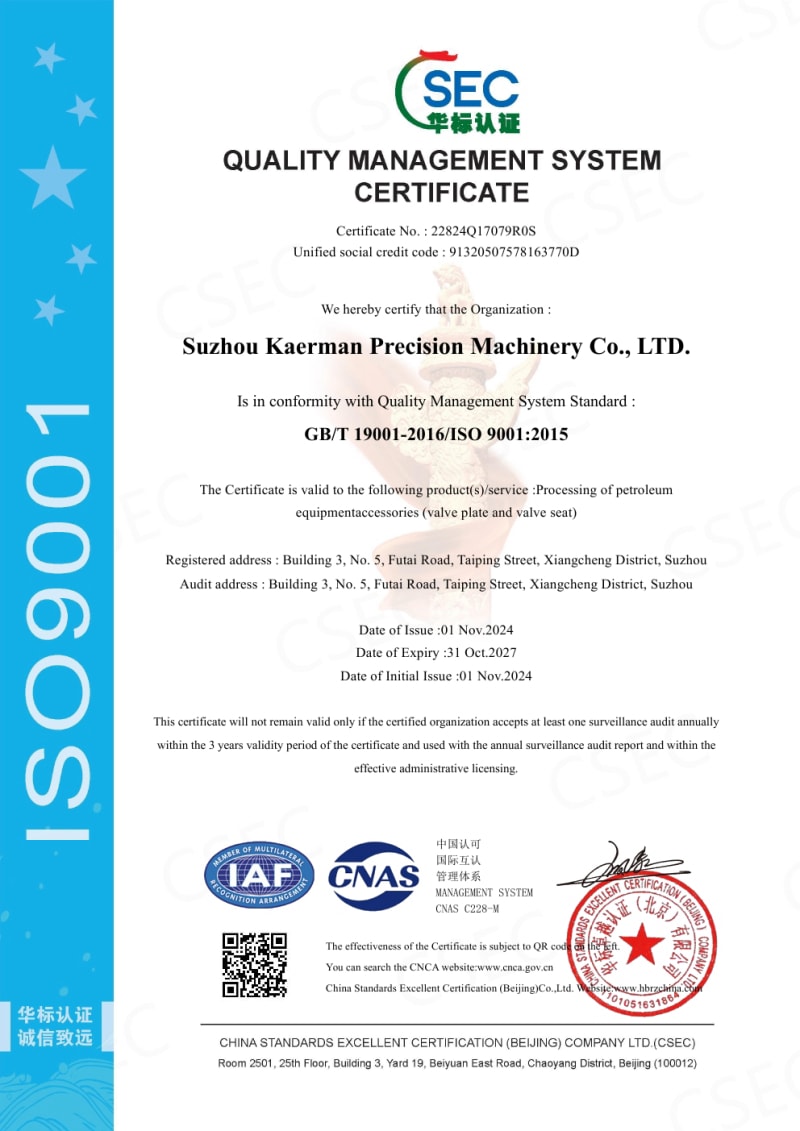
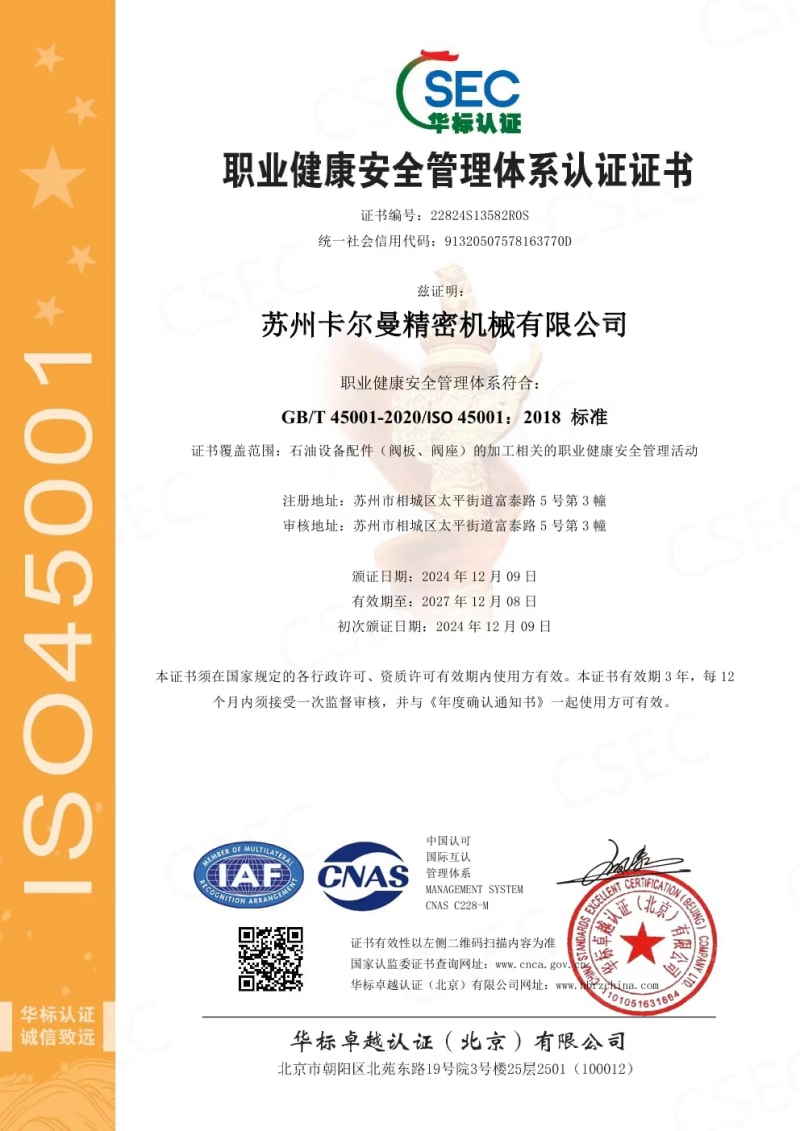
Premium precision-engineered gate valve replacement components manufactured in-house to support complete valve rebuild programs.