Leave Your Message
-
Contact WhatsApp
-
 Contact Phone
-
 Contact Email

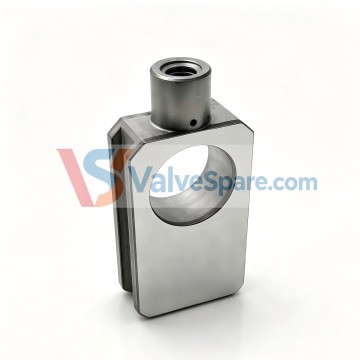
The United States oil and gas sector remains a global powerhouse, driven by massive production across major shale plays such as the Permian Basin, Eagle Ford, Bakken, and Marcellus, alongside sophisticated deepwater operations in the Gulf of Mexico. In these demanding environments, wellhead and Christmas tree equipment must operate continuously under extreme pressures (often exceeding 10,000 to 15,000 PSI) and in the presence of highly corrosive and abrasive fluids. API 6A valve seats and gates represent the critical barrier preventing catastrophic leaks, making their reliability paramount to both operational efficiency and environmental safety.
As US operators push the boundaries of lateral drilling and high-stage hydraulic fracturing, the demand for high-performance replacement parts has surged. Severe service conditions—characterized by high concentrations of frac sand, sour gas (H2S), carbon dioxide (CO2), and elevated temperatures—quickly degrade standard components. Consequently, procurement managers and petroleum engineers across Texas, Louisiana, and Oklahoma are increasingly seeking specialized manufacturers capable of delivering API 6A certified valve seats featuring advanced surface coatings, such as Tungsten Carbide (WC) applied via High-Velocity Oxygen Fuel (HVOF) thermal spraying.
In today's era of convenient internet communication, trust is scarce. We have always stayed true to our original aspiration, crafting valve products with meticulous craftsmanship, and winning recognition from global buyers.
Founded in 2011 in a humble workshop in Suzhou, our core mission was to break the monopoly of foreign high-end valve plates and seats, so that buyers would no longer have to rely on overpriced imported products. Facing industry pain points such as seat seal leakage and high-sulfur corrosion in oilfield applications, we stayed rooted in frontline operations, braving high temperatures and pressures to repeatedly test materials and optimize sealing structures, successfully resolving leakage issues.
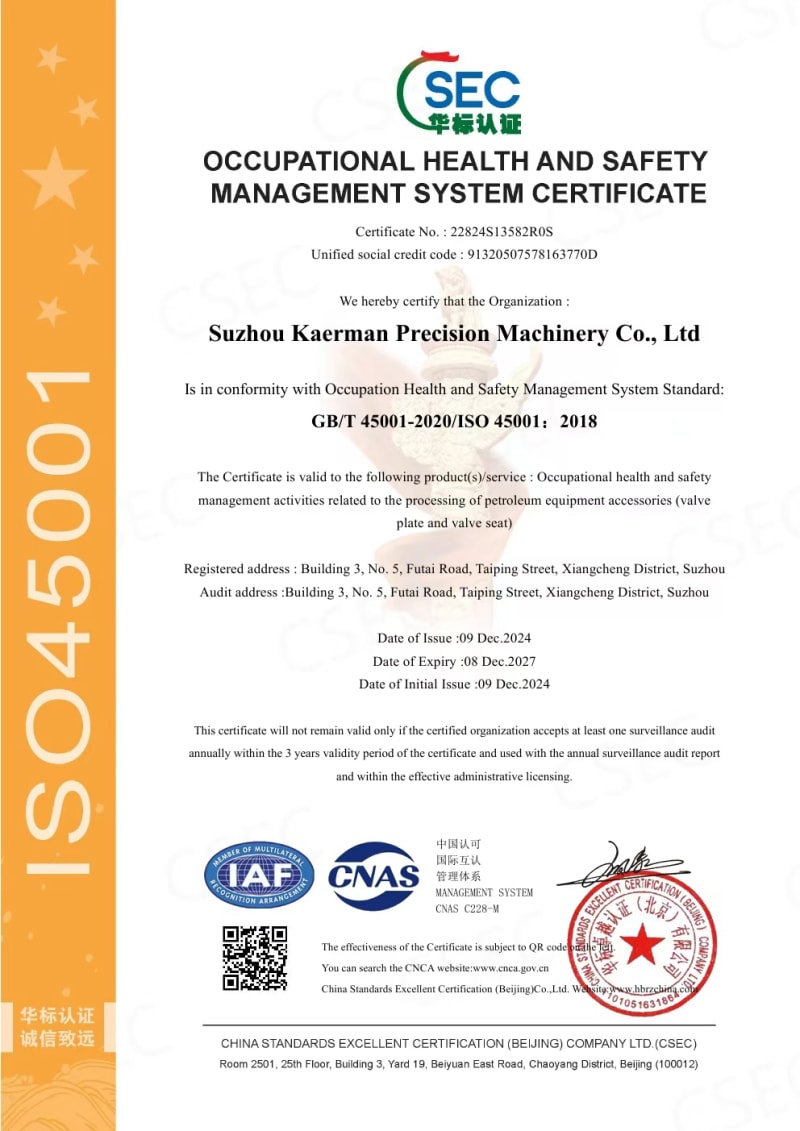
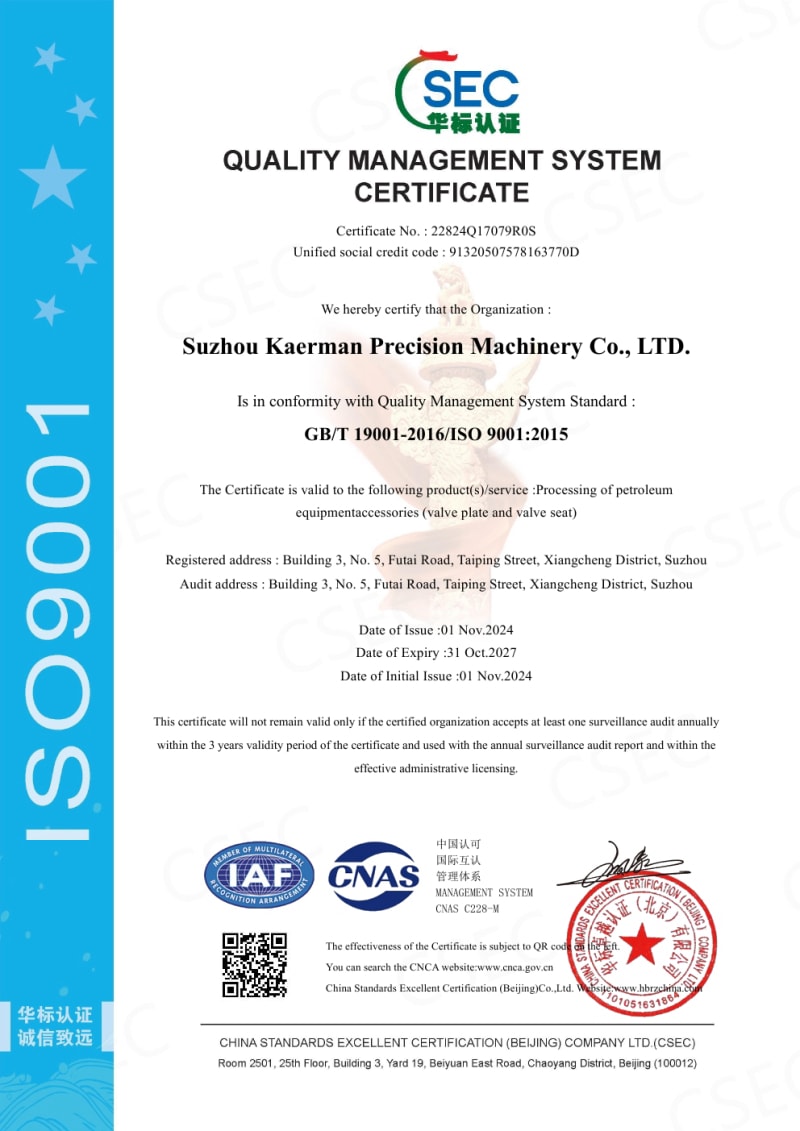
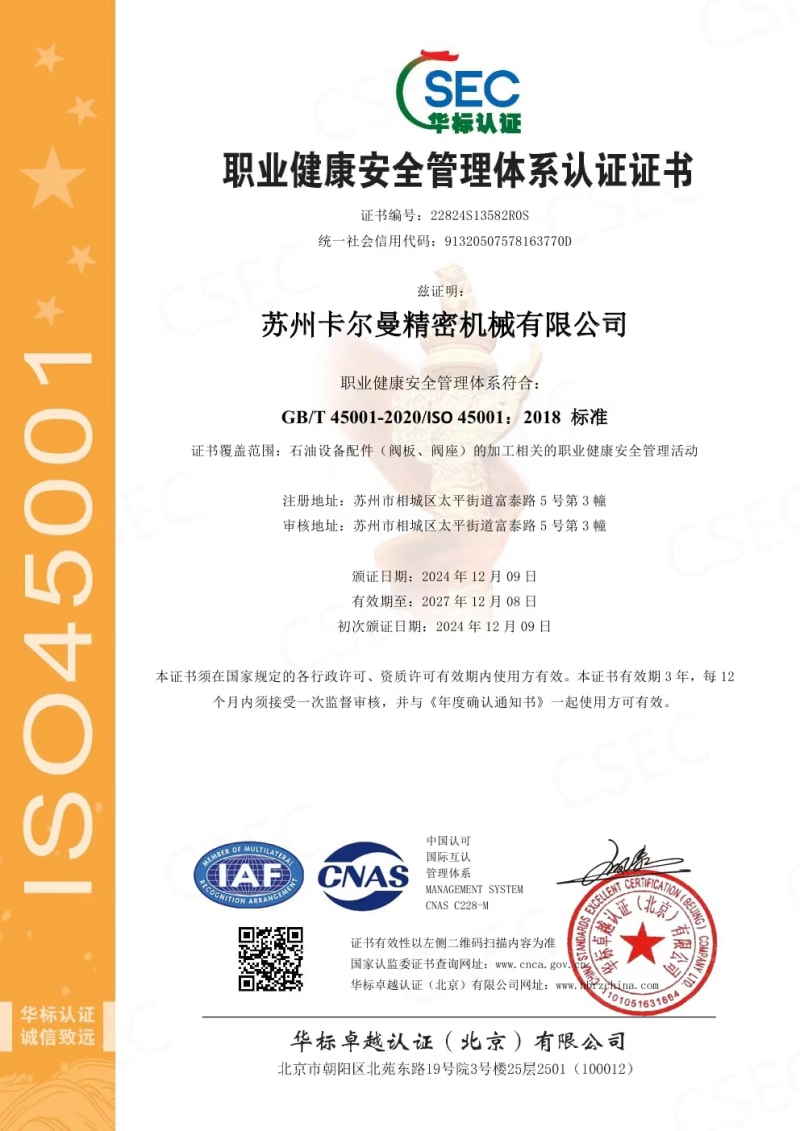
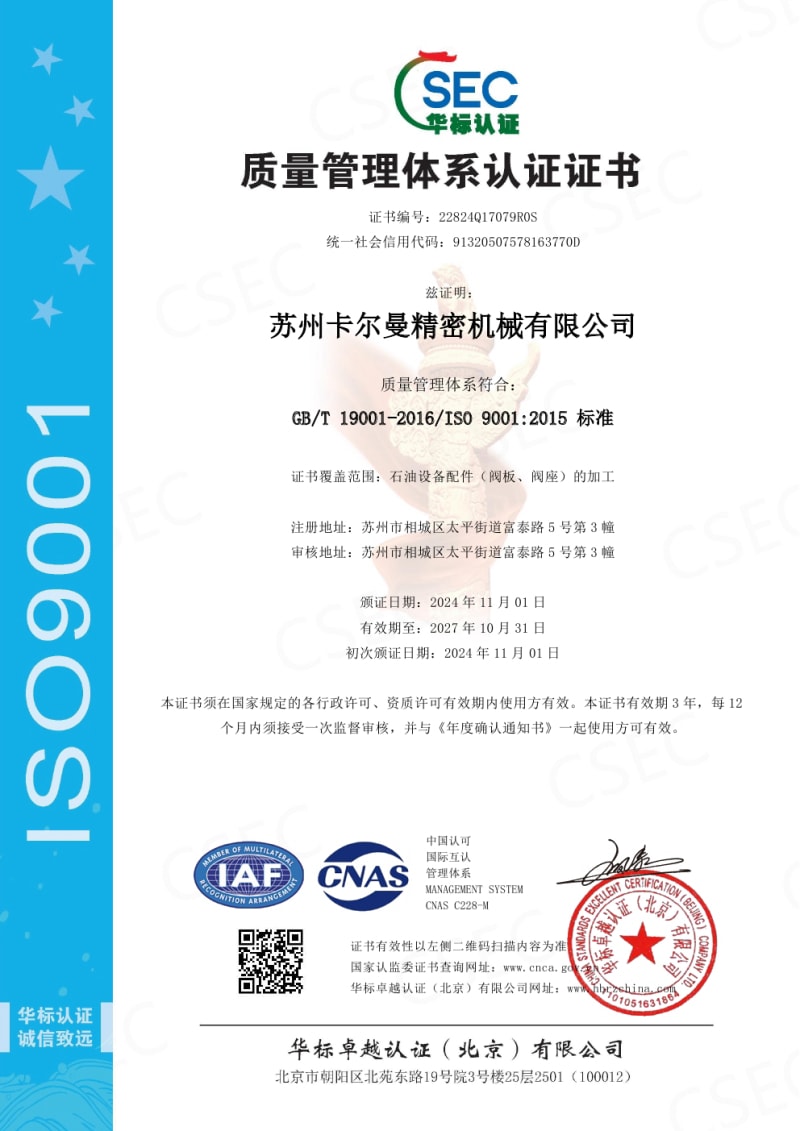
We are deeply committed to quality and have obtained API certification as well as the three management system certifications. From developing only valve plates and seats, we have grown into a partner capable of providing comprehensive solutions.
After 15 years of perseverance, we uphold our original aspiration with craftsmanship, and have become a trusted supplier of high-end valve accessories for global buyers through professionalism and sincerity.
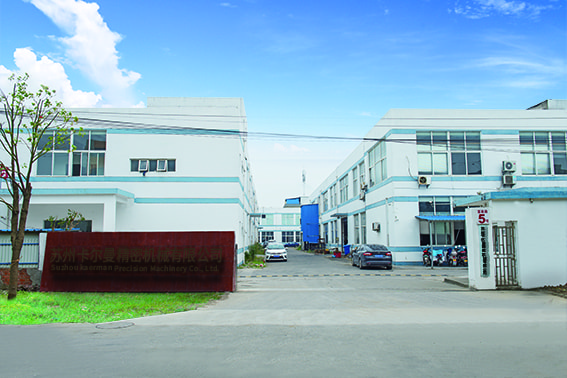
We are a team of seasoned engineers and technicians with years of hands-on experience in supersonic flame spraying for petroleum machinery. All core operators receive systematic professional training, bringing deep expertise in thermal spray technology and quality control.
We specialize in manufacturing precision wear-resistant parts (including valve gates, wellhead components, and sealing parts) using advanced PRAXAIR TAFA JP8000 supersonic flame spraying equipment. We customize coating processes and parameters for different products to deliver exceptional performance under extreme working conditions.
In the highly competitive US market, valve life cycle cost is a primary metric for oilfield service companies. Standard steel seats without specialized surface treatments quickly fail under the abrasive onslaught of proppants and high-velocity gas flows. Suzhou Kaerman addresses this challenge by utilizing state-of-the-art PRAXAIR TAFA JP8000 High-Velocity Oxygen Fuel (HVOF) systems to apply premium Tungsten Carbide (WC-Co-Cr) and Nickel-based alloy coatings. This supersonic flame spraying process ensures a mechanical bond strength exceeding 10,000 PSI, with coating porosities kept strictly below 1%, providing an impermeable barrier against corrosive media.
Our engineering team manufactures and supplies replacement seats fully compatible with industry-standard Type FC and Type FLS slab gate valves. Understanding the mechanical differences is key for US field engineers:
Our API 6A valve seats and gates are deployed across diverse environments in North America:
We solve critical pain points for oil & gas operators:
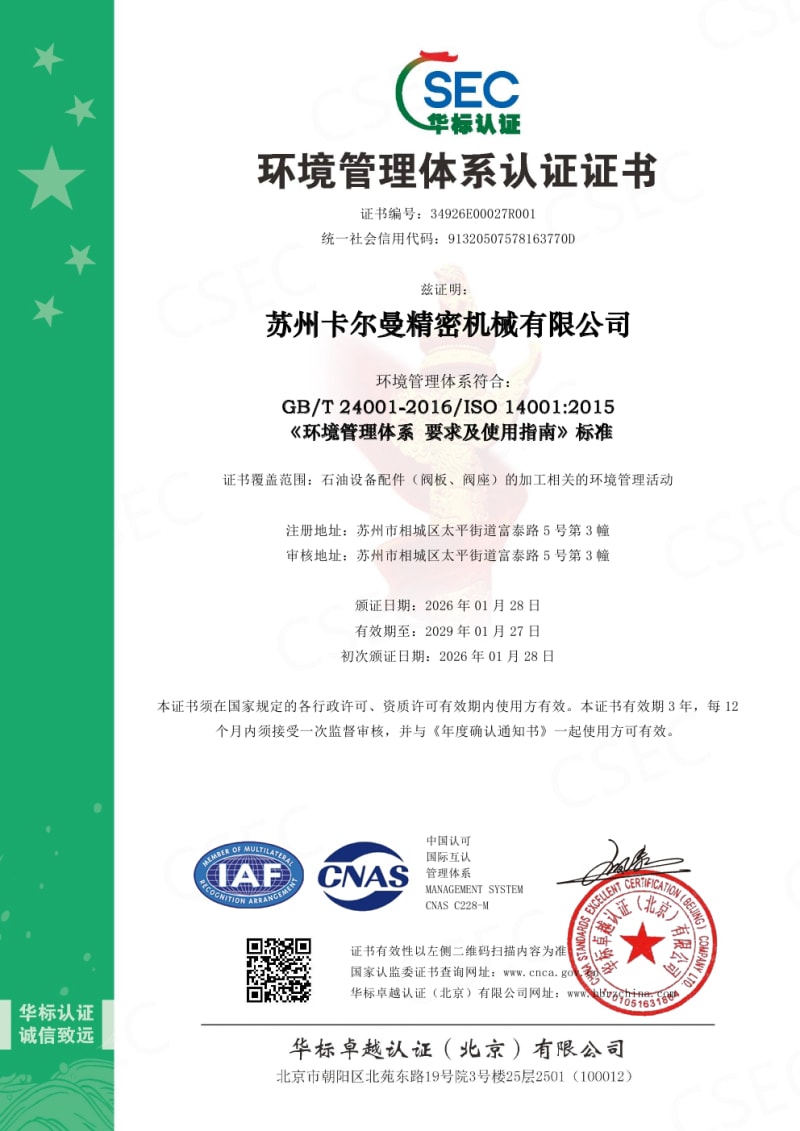
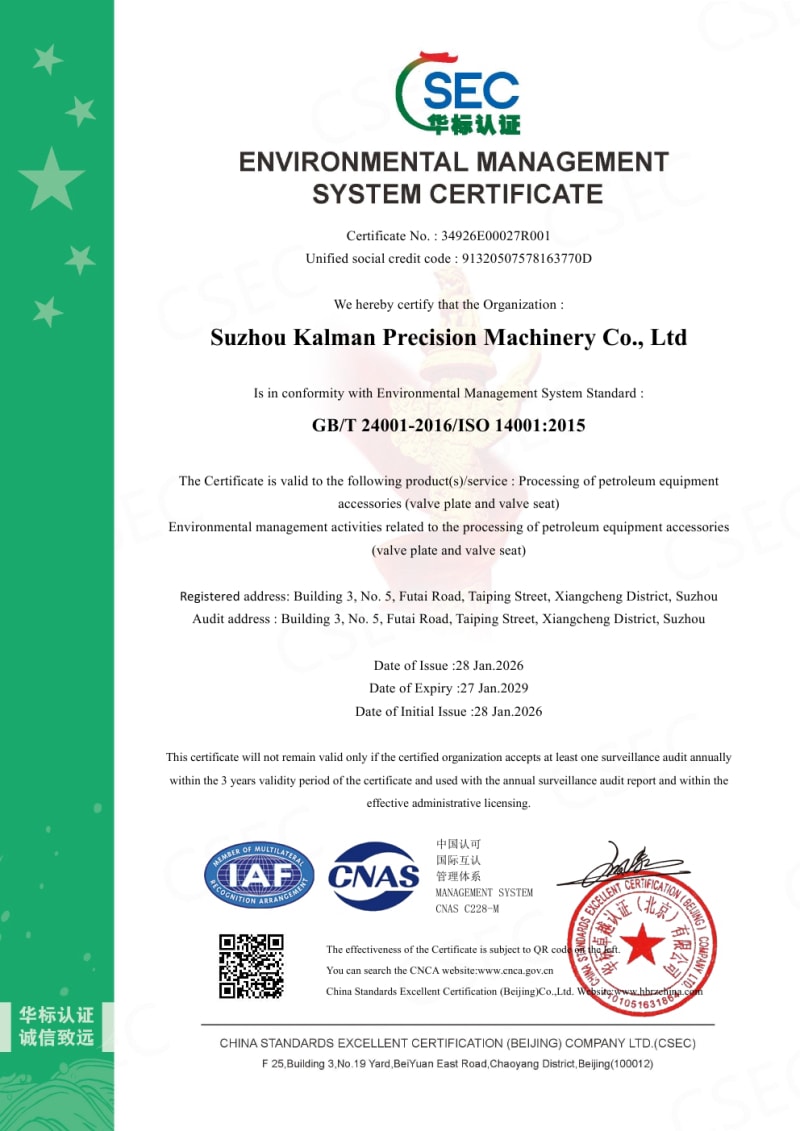
Our production facilities and quality control systems are fully certified to meet the stringent requirements of API 6A and ISO management standards, ensuring reliable performance in the field.
The North American valve market is undergoing rapid evolution, influenced by digital oilfield integration, stricter ESG (Environmental, Social, and Governance) mandates, and the shift toward domestic supply chain resilience. Procurement strategies are moving away from low-cost, short-lived components toward high-durability products that lower the Total Cost of Ownership (TCO). In this landscape, several key trends are shaping the future of API 6A valve components:
Under the EPA's updated regulations, reducing fugitive emissions from wellhead components is a critical priority. Valve stem packings and seat seals must maintain absolute integrity under dynamic cycling. Our packing glands and seat rings are designed with ultra-smooth surface finishes to reduce friction and wear on elastomer and graphite seals, minimizing leak paths.
Traditional hardfacing materials are being replaced by advanced nano-structured tungsten carbides and chromium carbide overlays. These materials provide superior fracture toughness and corrosion resistance when exposed to sour gas environments containing high levels of H2S and CO2. Our continuous investment in supersonic flame spraying technology allows us to apply these advanced coatings with unmatched precision.
US operators require flexible manufacturing partners with global production footprints to mitigate geopolitical risks and shipping delays. With three production bases located in China and Vietnam, Suzhou Kaerman provides US distributors and OEMs with a reliable, diversified supply chain that ensures consistent delivery times even during global supply chain disruptions.