Leave Your Message
0%

Picking the right API 6A valve components is not just about matching a pressure rating to a project datasheet. Not even close. These parts live in tough wellhead and Christmas tree systems, where pressure, temperature, fluids, and cycling conditions all push and pull on each other. So a solid selection really starts with the whole operating envelope. Look at working pressure, temperature range, bore size, end connections, PSL, PR, material class, and sour-service requirements. Small details matter. A valve body might look fine on paper, but the trim or sealing materials can still limit how it performs in the field.

Practical experience counts too. Engineers should compare manufacturer drawings, material certificates, qualification records, inspection plans, and traceability documents. A reputable supplier should be able to explain how each component supports API 6A requirements and your project specs. Ask about testing, coating, elastomer compatibility, spare availability, and maintenance access. These things get real fast when a valve sits above a crowded wellhead, deals with vibration, or needs service on a tight schedule. Documentation alone won’t tell you everything. How the supplier communicates says a lot.

There’s no one-size-fits-all component package. A setup that works well in dry gas might struggle with abrasive production fluids or repeated pressure cycling. That’s where selection gets messy. Real operating data can be incomplete, and assumptions sometimes sneak into the design. The best move is to write those assumptions down and challenge them before you buy. Experienced teams go back over them with operators, inspection specialists, and qualified manufacturers. The goal isn’t just compliance. It’s dependable service, clear accountability, and safer long-term operation. Good choices leave evidence behind.
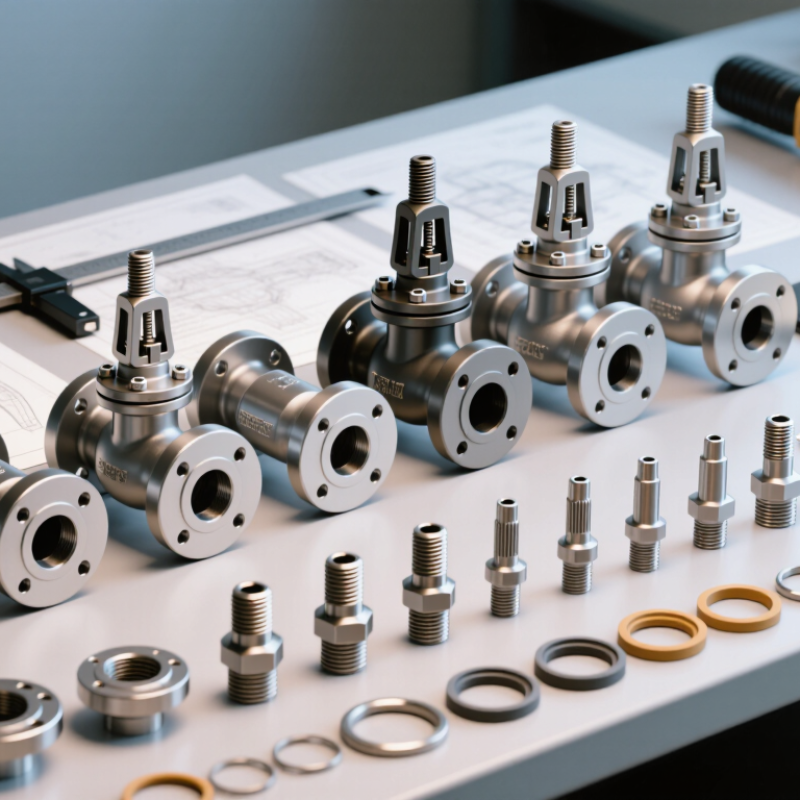
How to Choose API 6A Valve Components?

API 6A Valve Components: Standards, Functions, and Selection Criteria

Choosing valve components for wellhead and Christmas tree service requires more than matching a pressure rating. API Specification 6A defines requirements for equipment used in demanding oil and gas applications. Its pressure classes, temperature ratings, PSL levels, and PR categories affect safety, inspection, and service life. Api 6a Psl 3 Gate Valve Components should therefore be selected against the complete assembly, not as isolated parts.

The gate, seat, stem, body, bonnet, and sealing elements each have different duties. The gate controls flow, while the seats limit leakage under pressure. The stem transfers operating force and must resist wear, corrosion, and deformation. Confirm the material grade, heat treatment, dimensional tolerances, and connection type. PSL 3 also requires stronger control over manufacturing records, inspections, and pressure testing. Ask for traceability from raw material to finished component. Small gaps matter.

Field experience shows that a component can pass a basic pressure test and still perform poorly after repeated cycling. This is where selection becomes less certain. Temperature changes, abrasive fluids, trapped pressure, and infrequent operation may expose weaknesses. Review test procedures, acceptance criteria, and maintenance access before approval. Verify that replacement seals match the actual service conditions. A tidy specification is not always a complete one. Engineers should record assumptions and revisit them when field data changes.

Identify the Valve Type and Required Operating Conditions

How to Choose API 6A Valve Components?

Identify the valve type before selecting components. API Spec 6A, 21st Edition, covers working pressures from 2,000 to 20,000 psi. It also defines pressure, temperature, and product specification requirements.

A gate valve suits full-bore isolation, while a choke valve manages flow and pressure. Check whether the application needs a slab gate, expanding gate, or another design. Each choice changes the required body, bonnet, stem, seats, seals, and actuator.

Operating conditions must be written as measurable values. Record maximum working pressure, shut-in pressure, temperature range, fluid composition, sand content, cycle frequency, and connection size.

For sour service, verify material and qualification requirements under ISO 15156. IOGP safety guidance repeatedly emphasizes controlling stored pressure and selecting equipment for the actual service environment.

A component may pass a pressure test yet fail through erosion, thermal cycling, or seal swelling. That distinction is often missed. The first selection is rarely perfect.

Tips: Build a component matrix before requesting quotations. Match every part to the valve’s pressure class, PSL, temperature rating, and bore size.

For Fls Gate Valve Components, confirm stem metallurgy, seat design, gasket type, and bolting grade.

Ask for traceability records, material certificates, test results, and maintenance history. Do not accept “standard” as a technical answer.

Field conditions can be messier than the datasheet. Temperature changes, contaminated fluids, and repeated cycling deserve a second review.

Evaluate Pressure Ratings, Materials, and Temperature Limits

How to Choose API 6A Valve Components?

When selecting API 6A valve components, evaluate pressure ratings as a complete system. A valve may meet the required class, while its bonnet, seal, or connector may not. Match the rated working pressure with expected wellhead pressure, pressure spikes, and test pressure. Do not rely on nominal size alone. Pressure ratings can change across temperature ranges, so inspect the pressure-temperature chart carefully.

Material selection requires practical judgment. Low-alloy steel may suit demanding pressure service, but corrosive or sour fluids need stricter compatibility checks. Review chemical exposure, corrosion resistance, hardness, and material qualification records. Seals need scrutiny. Cold starts can harden elastomers, while hot fluids may reduce sealing performance. Confirm the minimum and maximum operating temperatures, not only the short-term test temperature.

I have seen specifications that looked complete but omitted the lowest startup temperature. That small gap mattered during equipment review. Check material certificates, heat numbers, test reports, and traceability documents. An experienced inspector should also examine machining quality, surface finish, and connection condition. Do not guess. If one component has unclear limits, pause the selection and request technical evidence. A reliable choice is based on verified data, not a familiar rating printed on a datasheet.

How to Choose API 6A Valve Components? - Evaluate Pressure Ratings, Materials, and Temperature Limits
Evaluation Factor What to Evaluate Reference Data and Typical Options Selection Guidance
Nominal Pressure Rating Select a working-pressure rating that is equal to or higher than the maximum anticipated wellhead or flowline pressure. Common API 6A nominal working-pressure ratings include:
2,000 psi / 13.8 MPa
3,000 psi / 20.7 MPa
5,000 psi / 34.5 MPa
10,000 psi / 69.0 MPa
15,000 psi / 103.4 MPa
Do not select a valve solely from normal operating pressure. Consider shut-in pressure, pressure surges, stimulation loads, testing loads, and the pressure rating of every connected component.
Valve Bore and Size Match the valve bore and end-connection size with the required flow capacity and the adjoining API 6A equipment. Typical bore sizes are specified in inches, such as 2-1/16 in, 2-9/16 in, 3-1/8 in, 4-1/16 in, and 5-1/8 in. The actual available size and pressure combinations depend on the product design. Confirm that the bore, flange or hub connection, face-to-face dimension, and actuator interface are compatible. A larger bore does not automatically provide a higher pressure rating.
Pressure Class Compatibility Verify that the valve, body, bonnet, stem, end connection, and associated equipment use the same required pressure class. API 6A equipment is commonly identified by nominal working pressure, such as 2K, 3K, 5K, 10K, or 15K. The complete pressure designation must be checked on the equipment data plate and documentation. The lowest-rated component controls the pressure capability of the assembly. Do not combine components with incompatible pressure classes or connection profiles.
Product Specification Level (PSL) Choose the PSL according to inspection, testing, traceability, and quality-assurance requirements. API 6A PSL designations range from PSL 1 through PSL 4. Higher PSL levels generally require more extensive manufacturing controls, documentation, inspection, and testing. Use the project specification and well-operator requirements to determine the required PSL. PSL is not a substitute for pressure rating, material class, or temperature class.
Performance Requirement (PR) Determine whether the valve must meet additional functional, endurance, or temperature-related performance testing. API 6A PR requirements are separate from PSL requirements. A valve may require a specified PR level for its intended service and operating duty. Confirm the required PR designation for repeated cycling, emergency shutdown, actuator operation, and other special service conditions before ordering.
Body and Bonnet Material Select a pressure-containing material with adequate strength, toughness, corrosion resistance, and compatibility with the produced fluids. Common engineering choices include:
Low-alloy steel: high strength for pressure-containing bodies.
Carbon or low-alloy steel with corrosion-resistant overlay: used when the base material needs additional internal protection.
Stainless or corrosion-resistant alloys: considered for more aggressive fluid environments.
Check the specified API 6A material class, heat treatment, hardness limits, impact requirements, and material certificates. Material selection must account for pressure, temperature, hydrogen sulfide, carbon dioxide, chlorides, and water content.
Trim and Stem Material Evaluate the wetted trim, stem, gate, ball, seats, and other internal parts for wear, galling, erosion, and corrosion resistance. Typical options may include:
Martensitic stainless steel: useful for strength and general wear resistance.
Precipitation-hardening stainless steel: selected where higher strength is needed, subject to sour-service restrictions.
Nickel-based corrosion-resistant alloys: considered for severe corrosion or sour environments.
Verify the actual alloy, hardness, heat treatment, coating or overlay, and compatibility with the selected material class. Avoid material combinations that may promote galling or galvanic corrosion.
Sour-Service Compatibility Determine whether the valve will be exposed to hydrogen sulfide or other sour-service conditions. For sour service, materials generally require controlled hardness, suitable heat treatment, and resistance to sulfide stress cracking in accordance with the applicable project and sour-service requirements. Do not assume that a stainless or high-strength alloy is automatically suitable for sour service. Confirm compliance with the specified material class and the applicable sour-service standard, commonly NACE MR0175/ISO 15156 where applicable.
Temperature Range Select a valve and seal system that can withstand the minimum start-up temperature and maximum continuous or transient temperature. API 6A temperature designations cover different service envelopes. Common engineering temperature ranges include:
Low-temperature service: approximately −50°C to −29°C minimum design temperature, depending on the specified class.
Standard service: approximately −29°C to 82°C.
Elevated-temperature service: may extend above 82°C when the valve, seals, and materials are specifically qualified.
Use the exact API 6A temperature class shown on the equipment specification. Check both pressure derating and seal limits at the maximum temperature; low-temperature toughness is equally important during cold start-up.
Seat and Seal Material Match elastomer and thermoplastic materials with temperature, pressure, fluid chemistry, decompression risk, and cycling frequency. Common options include:
Nitrile rubber: suitable for many general oil and gas applications within its qualified temperature range.
Hydrogenated nitrile rubber: improved resistance to heat and some chemical exposure.
Fluorocarbon elastomer: useful for higher-temperature or hydrocarbon service when chemically compatible.
PTFE-based materials: good chemical resistance, with temperature and extrusion limitations.
Confirm the manufacturer’s qualified temperature range, fluid compatibility, explosive-decompression resistance, and pressure-cycle capability. The seal limit may be lower than the metal-body limit.
Corrosion and Erosion Exposure Assess produced water, chlorides, carbon dioxide, hydrogen sulfide, sand, proppant, and high-velocity flow. Corrosion-resistant alloys, internal overlays, replaceable trim, hardened surfaces, and erosion-resistant flow paths may be required for severe service. For sand-bearing or erosive fluids, consider flow velocity, choke effects, valve position, trim hardness, and maintenance access. Material upgrades alone may not prevent erosion.
Actuation and Operating Mode Choose manual, hydraulic, pneumatic, or electric actuation based on operating frequency, fail position, available utilities, and emergency requirements. Actuator sizing depends on differential pressure, seat friction, stem torque or thrust, temperature, safety factor, and required operating time. Confirm that the actuator can operate the valve at the maximum differential pressure and minimum available supply pressure. Specify fail-open, fail-closed, or fail-in-place behavior where required.
Final Verification Review the complete valve datasheet, drawings, certificates, and test records before approval. Verify API 6A edition, nominal pressure, bore, connection type, PSL, PR, temperature class, material class, sour-service status, seal materials, test requirements, and traceability documentation. The final selection should be based on the complete operating envelope rather than one rating alone. The assembly must be limited by its lowest pressure, temperature, material, or connection capability.
Important: Pressure conversions are rounded from 1 psi = 0.00689476 MPa. Exact API 6A designations, temperature classes, material classes, PSL, PR, testing, and sour-service requirements must be confirmed against the applicable API 6A edition and the project specification.

Select Compatible Sealing, Actuation, and Connection Components

Choosing High Pressure Wellhead Gate Valve Components requires more than matching pressure ratings. Confirm the valve’s API 6A specification, product specification level, temperature class, and material class. These details determine whether the components suit the well environment.

Sealing components need careful attention. Select metal seals or elastomers that tolerate pressure, temperature, fluid chemistry, and possible sour service conditions. Check hardness, dimensional tolerances, and documented test results. A seal may look correct but still fail after thermal cycling. Small differences matter. Inspect grooves for scratches before assembly. In practice, rushed cleaning causes avoidable leakage.

Actuation components should provide enough closing force without damaging the stem or seats. Verify torque requirements, operating speed, fail position, and compatibility with hydraulic or manual control systems. Connection components also require exact alignment. Match flange size, pressure rating, gasket design, bolting material, and bore dimensions. Never force misaligned flanges together. That mistake can distort sealing surfaces. I would also review material certificates, inspection records, and pressure-test reports before installation. Some selection decisions remain uncertain when operating data is incomplete, so document assumptions and request clarification instead of guessing.

Verify Manufacturing Quality, Testing, and Certification Requirements

How to Choose API 6A Valve Components?

Verify Manufacturing Quality, Testing, and Certification Requirements

Selecting API 6A valve components requires more than checking dimensions. Review the manufacturer’s quality system, material traceability, and inspection records. Each Api 6a Valve Stem should match its heat number, drawing revision, and purchase specification. Ask for material test reports, hardness results, and applicable nondestructive examination records. Small gaps in traceability can become serious problems during field maintenance.

Testing must reflect the component’s intended service. Confirm pressure-test procedures, acceptance criteria, test-fluid control, and calibrated equipment records. For critical assemblies, review body, bonnet, seal, and stem testing separately. A certificate alone is not proof. Compare serial numbers, dates, signatures, and instrument calibration status. In practice, documents sometimes look complete but contain mismatched revisions. That deserves investigation.

Tips: Request certification before shipment. Check whether test personnel are qualified and independently verified. Confirm that the certificate covers the exact component, not only a similar model. Keep photographs of identification marks and packaging. Do not accept unclear scans. If a supplier cannot explain a deviation, pause approval and seek technical review. My own inspection approach is not perfect; I have learned that visual confidence can hide incomplete records. Ask one more question.

Compare Suppliers, Maintenance Needs, and Total Lifecycle Costs

Choosing API 6A valve components requires more than comparing purchase prices. Supplier qualification should include pressure-rating evidence, material certificates, heat-treatment records, and traceability to API Spec 6A requirements. Ask how each supplier controls elastomer storage, machining tolerances, and final pressure testing. A cheaper component may create longer inspection delays. That cost is easy to miss.

Maintenance planning changes the comparison. ISO 14224 recommends consistent failure and maintenance data for equipment analysis. Request suppliers to provide expected service intervals, failure modes, spare-part lead times, and field-replacement procedures. A valve installed in a corrosive, high-cycle environment may need different seals and trim than one used occasionally. Fit matters. Maintenance history matters more.

The U.S. Department of Energy’s Operations & Maintenance Best Practices Guide reports that predictive maintenance can reduce maintenance costs by roughly 8–12% compared with reactive maintenance, while lowering breakdown frequency and downtime. Use that evidence when evaluating condition monitoring, inspection access, and spare inventory. Calculate total lifecycle cost across procurement, testing, transport, installation, planned intervention, unplanned shutdowns, and disposal. I would still challenge every estimate. Reported savings may not transfer directly to a specific wellsite, especially when data quality is weak. A supplier offering clear service records may therefore provide greater value than one offering the lowest initial quote.

Bonnet Seal Ring Gasket Guide for FC, FL, and FLS Gate Valve Maintenance

Bonnet seal ring gaskets are essential to the safe and reliable maintenance of FC, FL, and FLS gate valves. Positioned between the bonnet and valve body, the gasket must maintain compression across changing pressure, temperature, and operating cycles. Correct material selection, accurate dimensions, and clean mating surfaces help prevent external leakage, corrosion, and unplanned shutdowns. During inspection, technicians should check for flattening, cracks, hardening, extrusion, or signs of chemical attack, while also verifying that bolts are tightened in a controlled cross pattern.

The U.S. Department of Energy’s steam-system guidance indicates that a small 1/8-inch steam leak at approximately 100 psig can waste tens of thousands of pounds of steam annually, demonstrating why minor sealing defects deserve prompt attention. The U.S. Environmental Protection Agency’s equipment-leak estimation guidance also recognizes pressure, temperature, fluid properties, and seal condition as key factors affecting fugitive emissions. For FC valve maintenance, selecting a bonnet gasket matched to the service conditions is therefore more than a replacement task—it is an important reliability and energy-control measure.

A comprehensive size range supports precise fitting across FC, FL, and FLS configurations, reducing installation delays and rework. With a local Houston support team, a fully stocked Houston warehouse, rapid-order capability, and convenient online specification selection, maintenance personnel can obtain the appropriate bonnet seal ring gasket quickly for scheduled or urgent gate-valve repairs.

FAQS

Why should the valve type be identified before choosing components?

A gate valve supports full-bore isolation. A choke valve controls flow and pressure. Each design needs different bodies, stems, seats, seals, and actuators.

Which operating conditions should be recorded?

Record working pressure, shut-in pressure, temperature, fluid composition, sand content, cycle frequency, and connection size. Use measurable values.

How do pressure and temperature ratings affect component selection?

Match every component to the valve’s pressure class, PSL, temperature rating, and bore size. A pressure test alone is not enough.

What problems can occur after a component passes testing?

Erosion, thermal cycling, and seal swelling may appear later. Field conditions can be messier than the datasheet.

What should be checked for sour service?

Verify suitable materials and qualification requirements under ISO 15156. Confirm material certificates and traceability before installation.

What documents should a supplier provide?

Request material certificates, heat-treatment records, pressure-test results, traceability documents, and maintenance history. “Standard” is not a technical answer.

How should suppliers be compared beyond purchase price?

Compare testing, machining controls, elastomer storage, lead times, spare parts, and replacement procedures. A cheaper part may cause longer inspection delays.

How does maintenance planning influence component choice?

Review service intervals, failure modes, inspection access, and replacement methods. A high-cycle valve may need different seals and trim.

What costs belong in a lifecycle comparison?

Include procurement, testing, transport, installation, planned work, unplanned shutdowns, spare inventory, and disposal. Initial price can mislead.

Is predictive maintenance always the best choice?

Not always. It may reduce costs and downtime, but results depend on site data and monitoring quality. I would challenge every estimate.

Conclusion

Choosing the right Api 6a Valve Components requires a systematic review of performance, compatibility, quality, and long-term value. Begin by identifying the valve type and defining the required operating conditions, including pressure, temperature, fluid characteristics, flow requirements, and installation environment. Then evaluate pressure ratings, construction materials, temperature limits, and corrosion resistance to ensure reliable service under expected conditions.

Special attention should be given to sealing elements, actuation systems, and connection components, as their compatibility directly affects safety and valve performance. Buyers should also verify manufacturing quality, inspection procedures, pressure testing, traceability, and applicable certification requirements. Finally, compare suppliers based on technical support, delivery capability, spare-part availability, maintenance demands, expected service life, and total lifecycle cost rather than purchase price alone. A well-informed selection process helps reduce operational risks, improve equipment reliability, and ensure that the complete valve assembly meets its intended application requirements.
Isabella

Isabella

Isabella is a seasoned marketing professional at a leading manufacturer specializing in high-performance wear-resistant components for the oil and gas industry. With a deep understanding of the intricate demands and challenges of this sector, she is dedicated to enhancing the company's outreach and......
Previous How to Choose API6A Stem Bushing?