


News

A $2.5 Trillion New Market! This Emerging Sector Is Powered by Oil & Gas Technical Equipment
2026-11-16
Tech giants are rolling out data centers across the globe. Their biggest challenge is not just chips — it is power: reliable, clean, and rapidly available. In this race for stable power supply, a once niche energy source is stepping into the spotlight: geothermal energy.

Thermal Well: The Hidden Key for PSL4 Qualification! Bad Thermal Well Practice = Fake Temperature Readings
2026-10-27
The furnace controller steadily holds the set temperature, soaking time is strictly followed. Yet when you open the furnace door — hardness fails, and metallographic structure is a mess. Worse still, parts from the same heat load show huge inconsistency: some are far too hard, while others are overly soft.
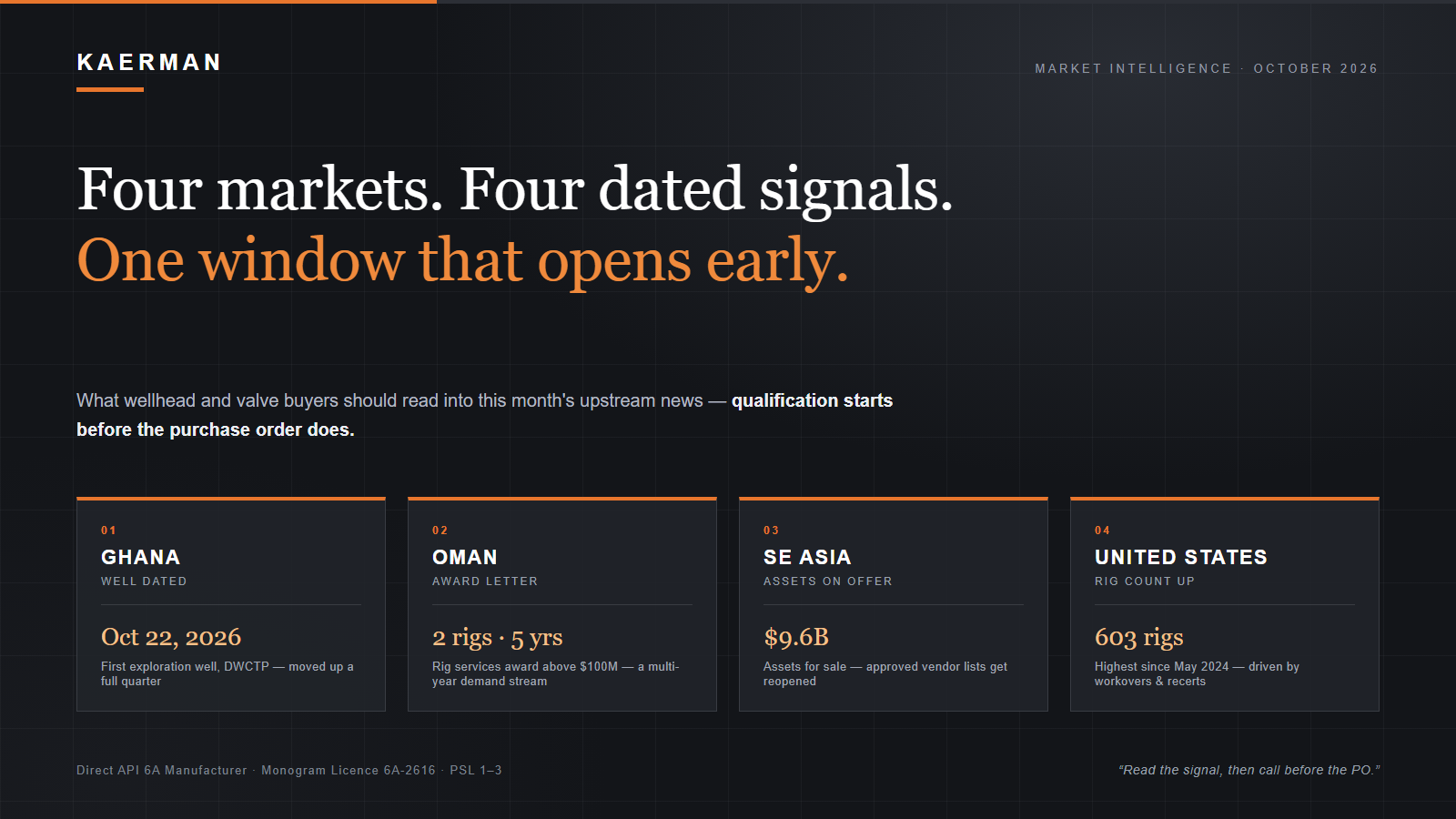
A Date, an Award Letter, an Asset Sale: Q4's Four Upstream Signals for Wellhead Buyers
2026-10-12
The second week of October added dates to four upstream markets that wellhead buyers watch. This time the detail is not in the headlines but in the timing.
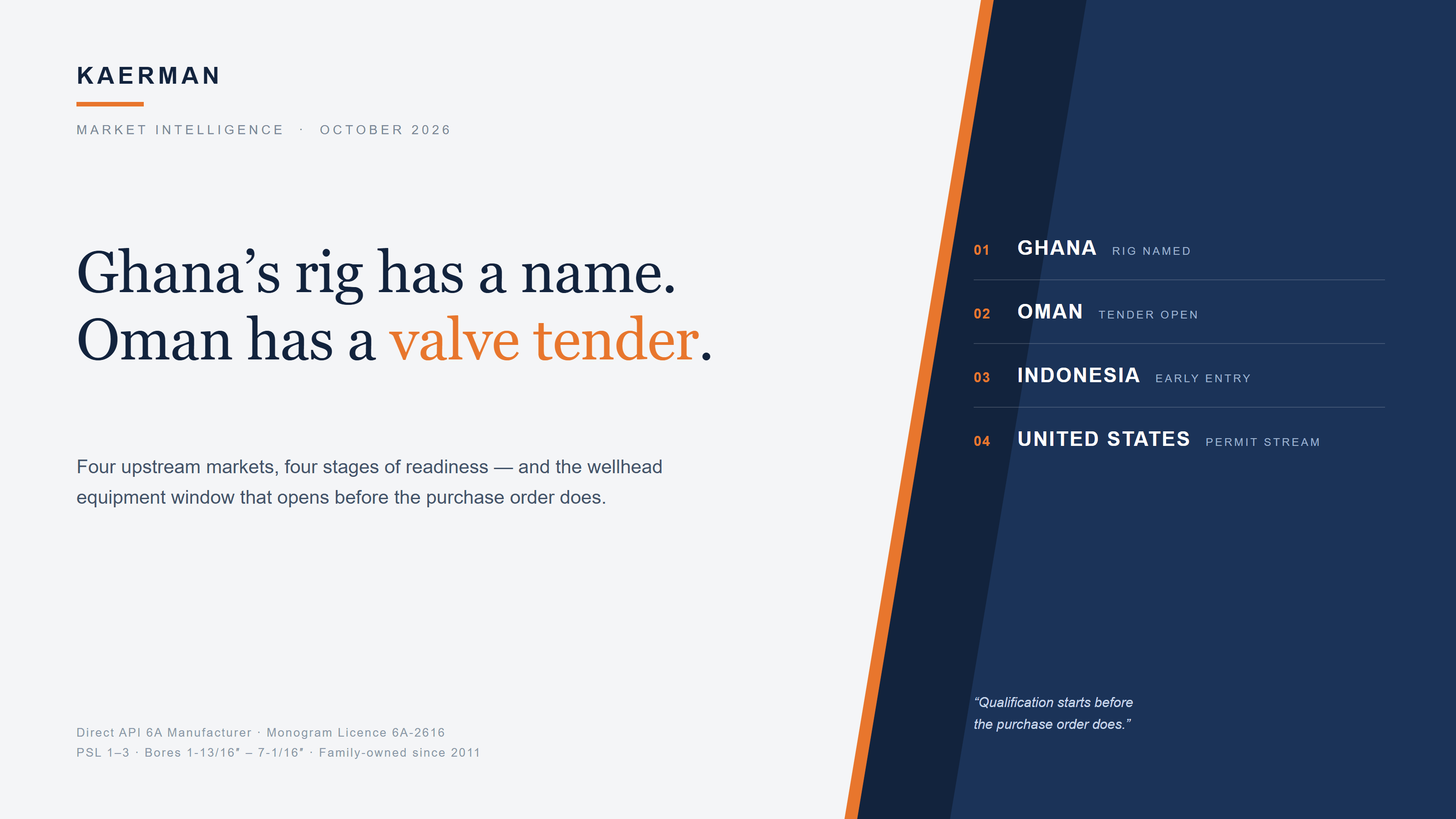
Ghana's Rig Has a Name. Oman Has a Valve Tender. Q4 Is Where 2027 Gets Decided.
2026-10-05
Four regions, four different stages of readiness — and a qualification window that opens before the purchase order does.

Q4 2026 Wellhead Procurement Outlook: New Project Windows in Oman, Ghana, Indonesia and North America
2026-09-28
Late September brought a string of upstream project updates across four regions that matter to wellhead equipment buyers: a new operator-held exploration package in Oman, a drilling campaign taking shape offshore Ghana, a wellhead package defined but not yet sanctioned in Indonesia, and steady land drilling activity in the US Rockies. For procurement teams, each of these creates a different kind of buying window — and they open at different speeds.
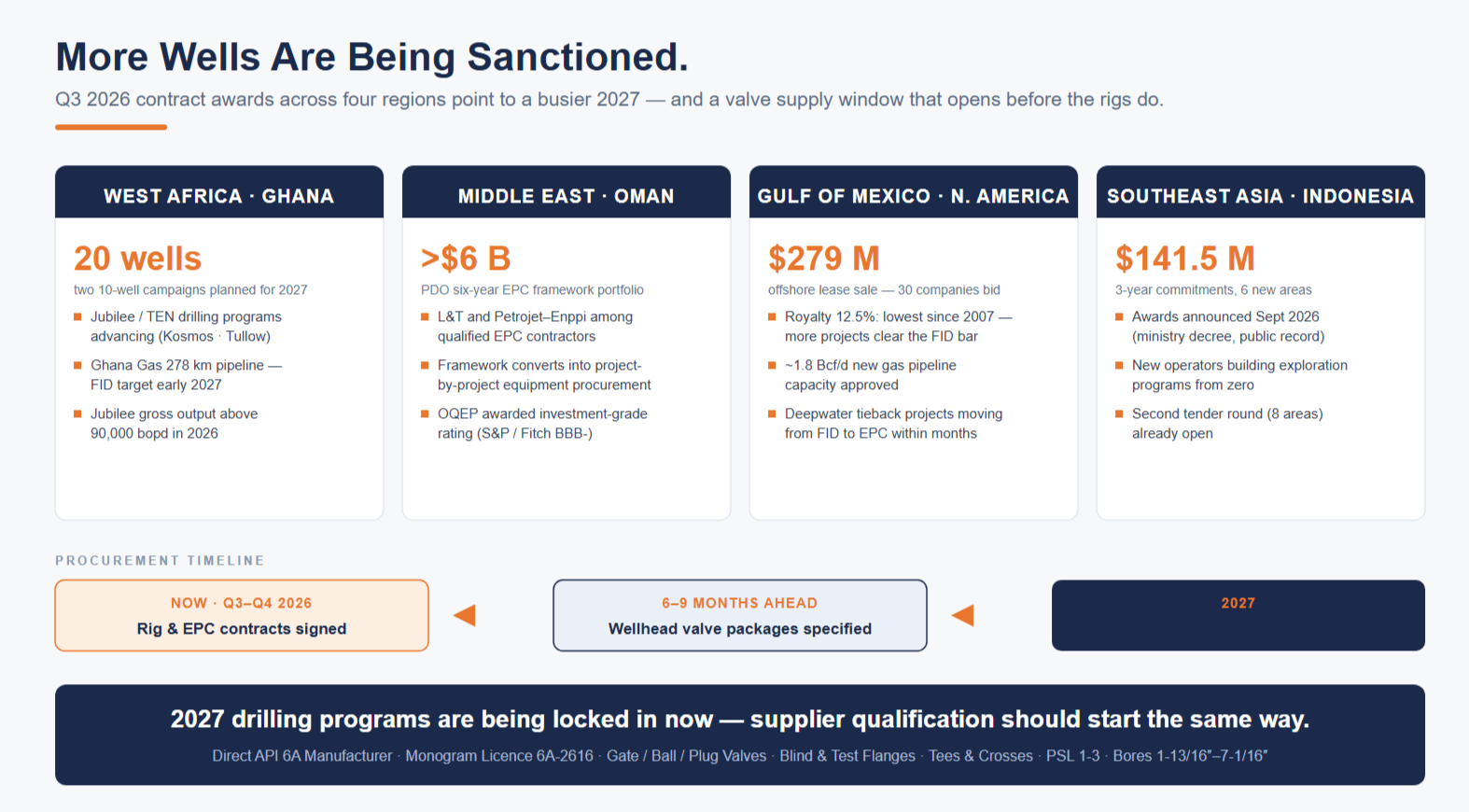
More Wells Are Being Sanctioned. The Question for 2027 Is Where the Wellhead Hardware Comes From.
2026-09-23
Q3 contract awards across West Africa, Oman and the Gulf of Mexico point to a busier 2027 drilling year — and a supply window that opens months before the rigs do.
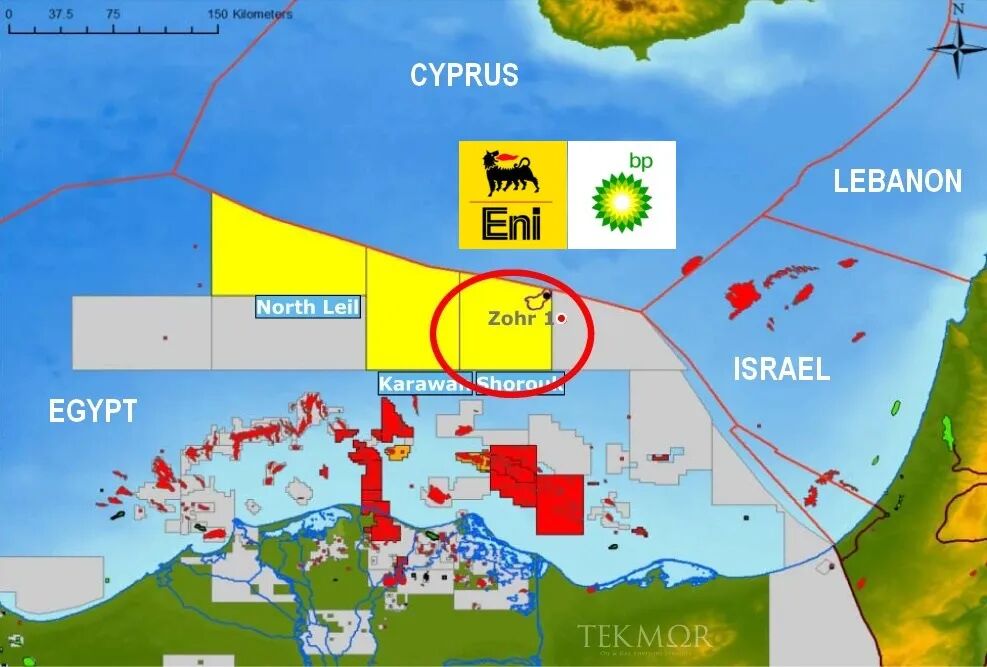
Eni Unveils USD 8 Billion 5-Year Investment Plan in Egypt Amid Eastern Mediterranean Energy Shifts
2026-09-15
Claudio Descalzi, CEO of Italian energy giant Eni, met with Egyptian President Abdel Fattah el-Sisi in New Alamein, Egypt, and announced a landmark investment plan: an additional USD 8 billion will be injected into Egypt over the next five years (approximately RMB 54.2 billion). The plan covers drilling of 30 exploration wells and 200 development wells across offshore Mediterranean waters, the Nile Delta, the Western Desert and offshore Sinai Peninsula. Combined with the cumulative USD 8.5 billion invested since 1954, Eni’s total investment in Egypt will exceed USD 16.5 billion, further cementing its position as Egypt’s largest oil and gas investor.
Behind this massive commitment lies sustained optimism over Egypt’s substantial oil and gas potential, and it also reflects profound reshaping of the Eastern Mediterranean energy landscape. Within this strategic framework, China’s “Big Three” national oil companies are deploying their assets through different approaches, with strategies that form an intriguing contrast to Eni.
Strait of Hormuz Deadlock: US Caution on Market Expectations Amid Iran Nuclear Warnings
2026-09-15
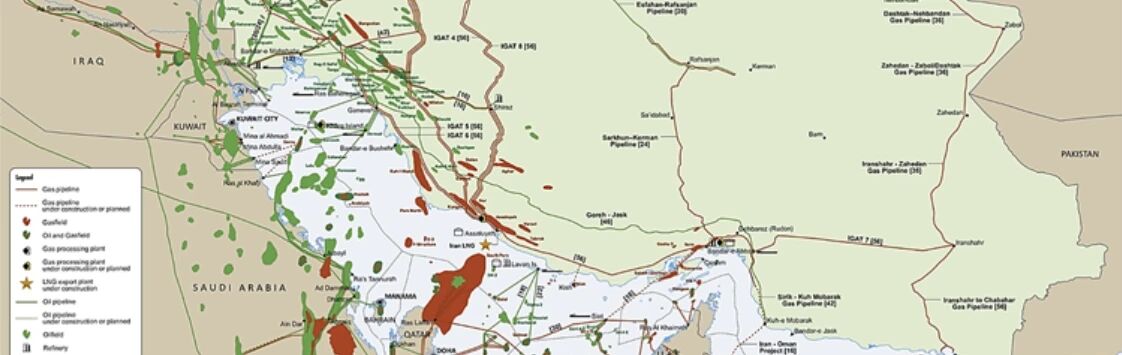
Iran is planning to propose a temporary navigation scheme for the Strait of Hormuz to Gulf states in an attempt to break the deadlock over the waterway. In response, U.S. Secretary of Energy Chris Wright has explicitly cautioned oil markets against holding optimistic expectations for near-term breakthroughs on the strait situation.
Daily Oil & Gas Industry Brief
2026-08-31
SLB will carry out conceptual design and FEED (Front‑End Engineering Design) study for Harbour Energy’s Havstjerne carbon‑storage project in the North Sea, covering reservoir assessment and monitoring‑system design. Located in the Norwegian North Sea, this project delivers new storage solutions for European CCS (Carbon Capture and Storage) infrastructure. SLB further expands its CCS technical footprint, reflecting accelerating momentum for repurposing decommissioned North‑Sea oilfields for carbon storage.
Iraq’s $45‑Billion Loss! Six‑Month Closure of the Strait of Hormuz: Who Suffers the Most?
2026-08-31
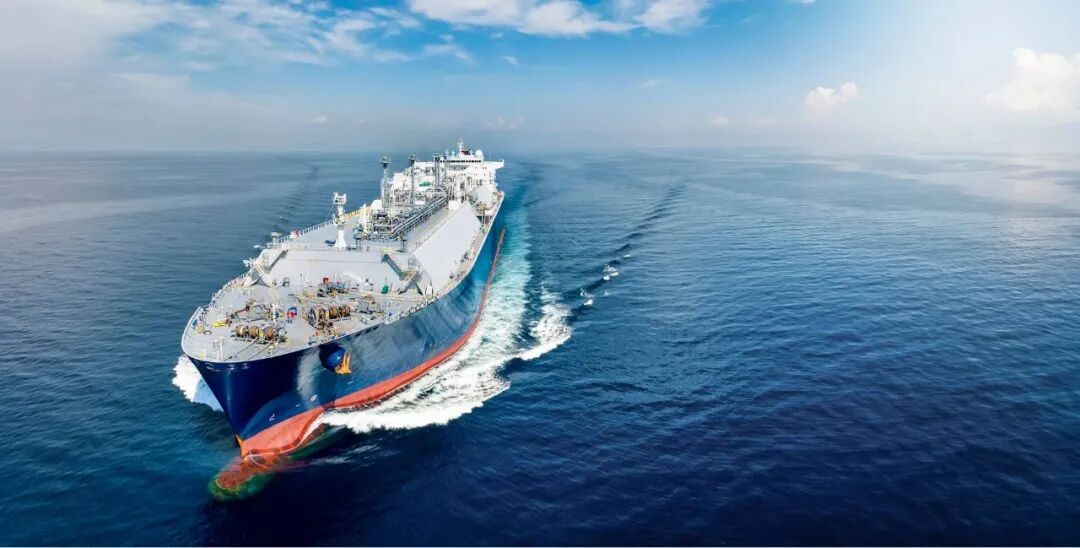
In February 2026, sudden geopolitical turbulence hit the Middle East. Regional unrest disrupted shipping order in the Strait of Hormuz and caused partial suspension of maritime transport. This chokepoint carrying roughly 20 % of global oil trade and 20 % of global LNG trade was largely paralysed over the subsequent six‑month period. According to data from the UK Maritime Trade Operations (UKMTO), energy intelligence firm Kpler and vessel‑tracking provider MarineTraffic, commercial shipping volumes through the strait plummeted by over 90 % at one stage. United Nations figures indicated an even steeper drop of 95.3 %. The global energy market endured its most severe supply‑side shock since the oil crises of the 1970s.