






Baker Hughes Releases Weekly North America Active Rotary Rig Count Report
2026-08-10
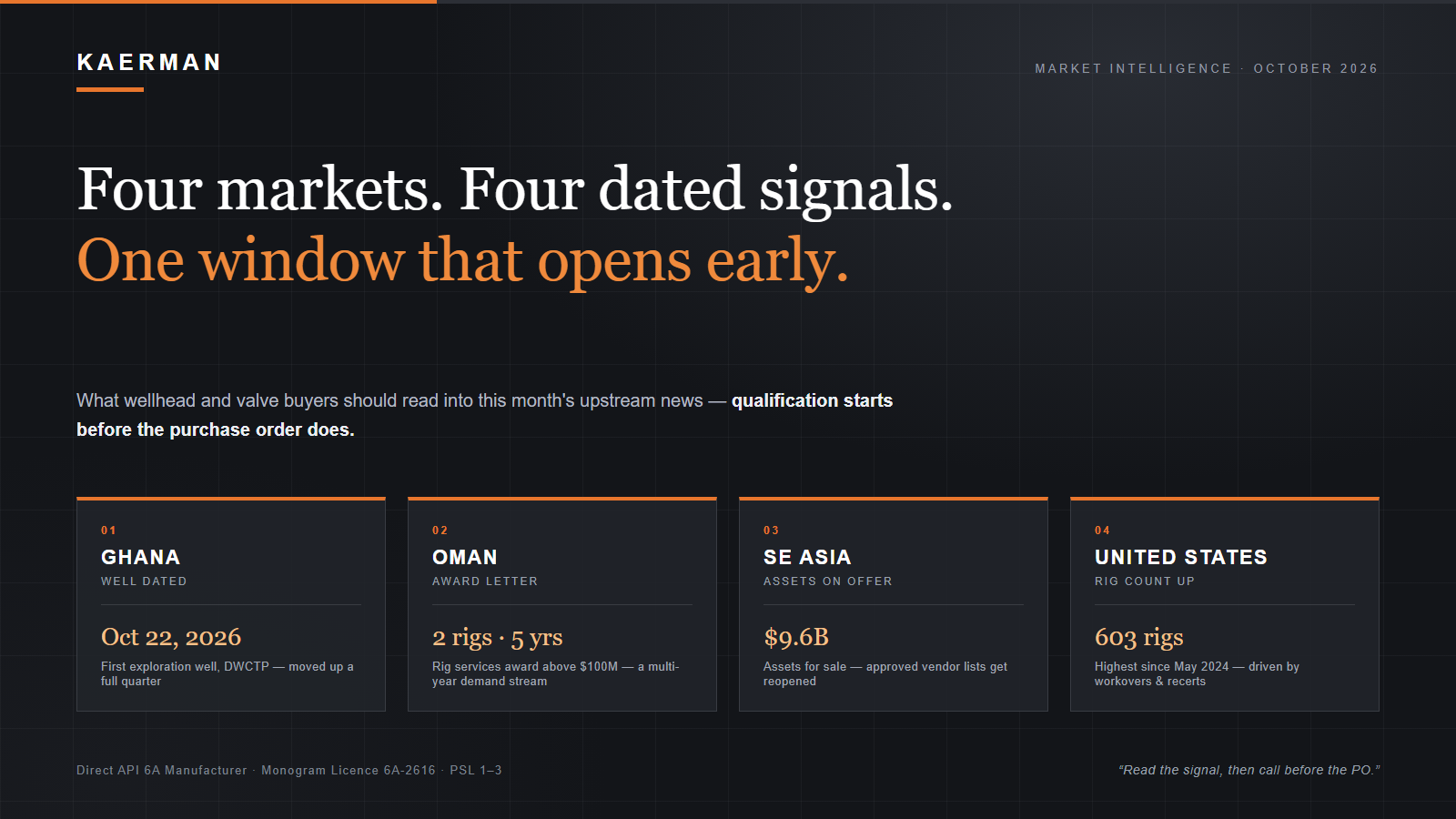
The U.S. domestic drilling market maintained steady operation in general. The total number of active oil and gas rigs stood at 588, unchanged week-on-week and rising by 49 year-on-year. The rig fleet has stayed above this benchmark for nearly 15 months, fully demonstrating the steady resilience of upstream capital expenditure in North America. Despite the stable overall volume, the oil and gas segments moved in completely opposite directions, with drilling resources swiftly shifting toward crude oil development. Specifically, crude oil rigs rose by 3 week-on-week to 454, hitting the highest level since May 2025. This reflects restored investment appetite among U.S. shale operators amid robust crude export demand and range-bound oil prices, driving proactive expansion of crude production capacity.
In stark contrast to the upturn in oil drilling, U.S. natural gas drilling cooled down temporarily. Natural gas rigs fell by 3 week-on-week to 124, marking the lowest level since June 2026. Industry analysts explained that the U.S. domestic natural gas market features loose supply-demand balance and elevated inventories in summer, with limited incremental demand from residential and industrial consumption. Coupled with cautious market sentiment towards long-term gas prices, upstream operators have voluntarily scaled back gas drilling to optimize capital allocation and pivot toward higher-margin crude oil exploration and production. Neutral-purpose rigs held steady at 10, ensuring stable operation of auxiliary drilling support systems.
In terms of core shale basins, new drilling activities are highly concentrated in major oil-producing areas, further widening regional divergence. As the largest shale play in the United States, the Permian Basin kept expanding drilling momentum, adding 3 active rigs week-on-week to 263, a peak not recorded since July 2025 and the primary engine driving U.S. oil rig growth. Drilling operations across Texas also climbed moderately with a net addition of 2 rigs, accelerating capacity rollout in key oil-bearing zones. On the contrary, the gas-dominant Marcellus Shale in Pennsylvania posted a minor reduction of 1 rig; the pullback in gas-focused drilling is consistent with weak gas market fundamentals.
Canada’s drilling market underwent a mild short-term correction after a prolonged upward run, yet its long-term recovery fundamentals remain intact. The total active rig count in Canada reached 216, down 3 week-on-week but surging by a substantial 36 year-on-year, which highlights sustained vitality in local upstream development. Its drilling mix also showed structural differentiation: oil rigs decreased by 4 to 146 week-on-week, gas rigs edged up against the trend by 2 to 65, and miscellaneous rigs slipped to 5. This demonstrates that Canadian oil and gas operators flexibly adjust drilling portfolios in light of local resource endowments and market demand.
The combined active rig count of the U.S. and Canada reached 804, keeping North America’s overall E&P activity firmly at its yearly high. Meanwhile, Baker Hughes’ July monthly global rig data showed 1,096 active rigs outside North America, rising by 23 month-on-month and 17 year-on-year, signaling steady expansion of global investment in oil and gas exploration and production.
Industry analysts pointed out that the North American drilling market is now clearly characterized by stable overall volume, structural optimization and regional differentiation. Under the prevailing industry principle of stringent capital discipline prioritizing cash flow generation and shareholder returns, North American oil and gas producers have abandoned blind large-scale capacity expansion in favor of refined, market-oriented development strategies, adjusting drilling portfolios dynamically based on fundamental price spreads between crude oil and natural gas. As a leading indicator of future output, the current growth in oil rigs will support steady growth in U.S. crude supply over the next three to six months, whereas the decline in gas rigs may point to a marginal slowdown in the growth rate of domestic U.S. natural gas supply in the long run.
Looking forward, market participants will keep close track of key indicators including international crude oil prices, North American oil and gas inventory levels, and LNG export bookings to monitor whether the current divergent drilling pattern can be sustained. In accordance with its regular release schedule, Baker Hughes will update the weekly North American rig count every Friday, while global rig statistics are published on a monthly basis